


Relationship Between Estrogen-Induced BRCA2 and Development of Gastric Cancer
DOI:
https://doi.org/10.14740/wjon2875Keywords:
Gastric cancer, BRCA 1/2, Helicobacter pylori, Pathogenic variantAbstract
Background: Gastric cancer (GC) is the fourth most common malignancy, affecting one in 11 men (9.1%) and one in 23 women (4.38%). Helicobacter pylori (H. pylori) infection and smoking are the primary risk factors for GC. Individuals who have multiple other family members with GC are also at higher risk owing to lifestyle and genetic factors. H. pylori-eradicating medications can reduce the risk of disease. The incidence of GC increases after 50 years of age, particularly among men; however, the reason for the differing incidence rates between the sexes remains unclear.
Methods: To clarify the reasons for sex differences in GC incidence rates from a molecular pathological perspective, we utilized cancer genome profiling (CGP) and information on BRCA2 expression levels obtained by immunohistochemistry and the number of GC cases in the family.
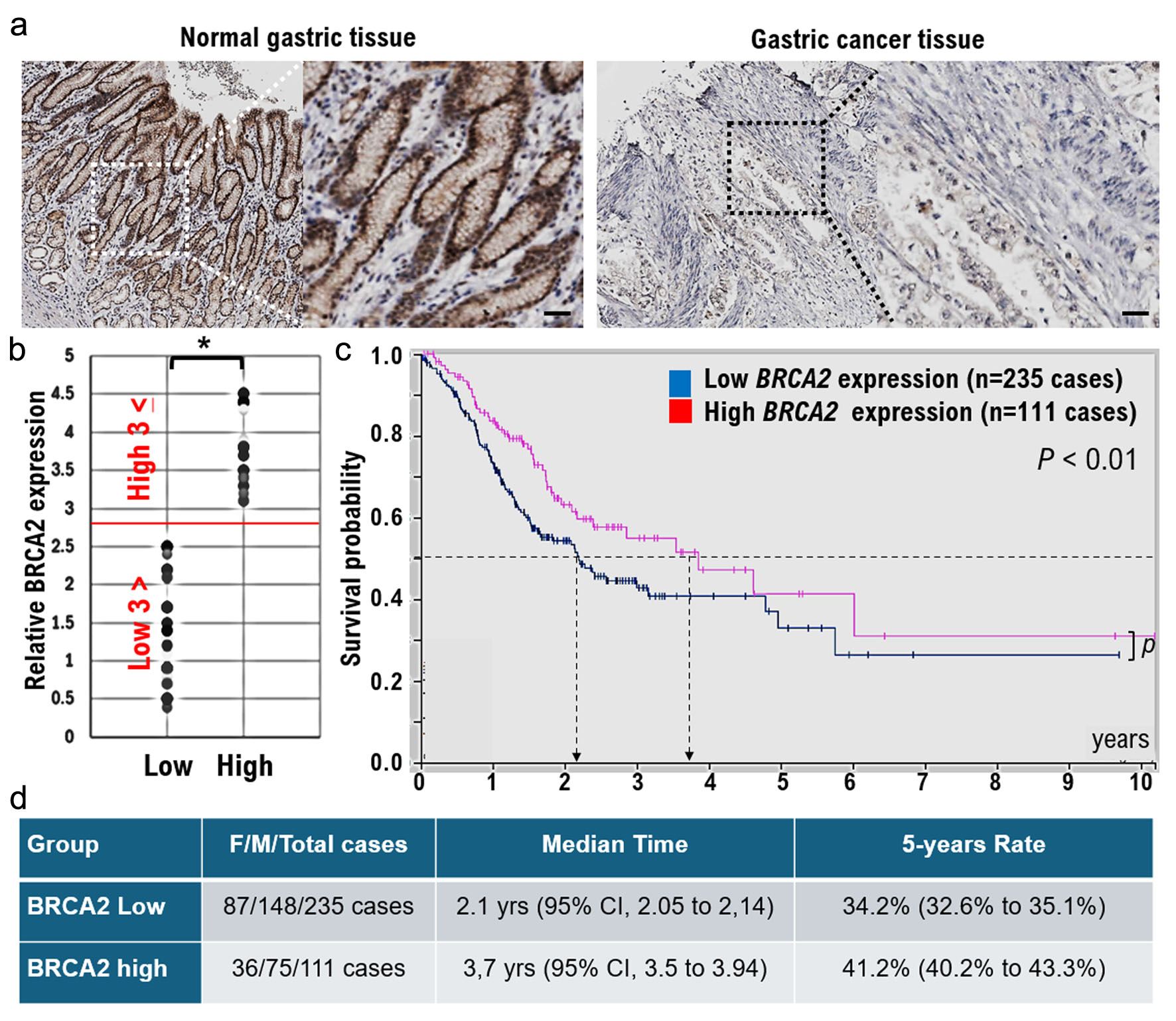
Results: We investigated the incidence of GC in families with hereditary breast and ovarian cancer (HBOC) and found it to be 4.2-fold higher than that in non-HBOC families. In families with versus without HBOC, men accounted for 74.57% and 53.67% of all GC cases, respectively, indicating that men are more likely to develop GC in the former group. Furthermore, estrogen stimulation induced breast cancer type 2 (BRCA2) expression in genetically modified mice as well as in cultured cells, and low-grade atypical cells were observed in the gastric mucosal tissues of female mice that underwent ovarian resection. Additional research experiment revealed that stimulation by the female hormone estrogen induces the expression of BRCA2, which suppresses the development of GC. Clinical studies have also shown that patients with GC who have high BRCA2 expression exhibit longer survival rates than those in whom BRCA2 expression is low.
Conclusions: Overall, the data suggest that the higher mortality rate of GC in men than in women may be due to a protective effect of BRCA2.
Published
Issue
Section
License
Copyright (c) 2026 The authors

This work is licensed under a Creative Commons Attribution 4.0 International License.