

Integrated Transcriptomic Analysis Identifies Potential Biomarkers in Castration-Resistant Prostate Cancer
DOI:
https://doi.org/10.14740/wjon2772Keywords:
Prostate cancer, Castration-resistant prostate cancer, RNA sequencing, Gene expression, Biomarkers, BioinformaticsAbstract
Background: Castration-resistant prostate cancer (CRPC) represents an aggressive stage of prostate cancer that develops following resistance to androgen deprivation therapy. Although androgen receptor (AR) signaling remains a central driver of disease progression, additional adaptive molecular mechanisms contribute to therapeutic resistance. Understanding the transcriptional programs underlying CRPC may facilitate the identification of novel biomarkers and therapeutic targets.
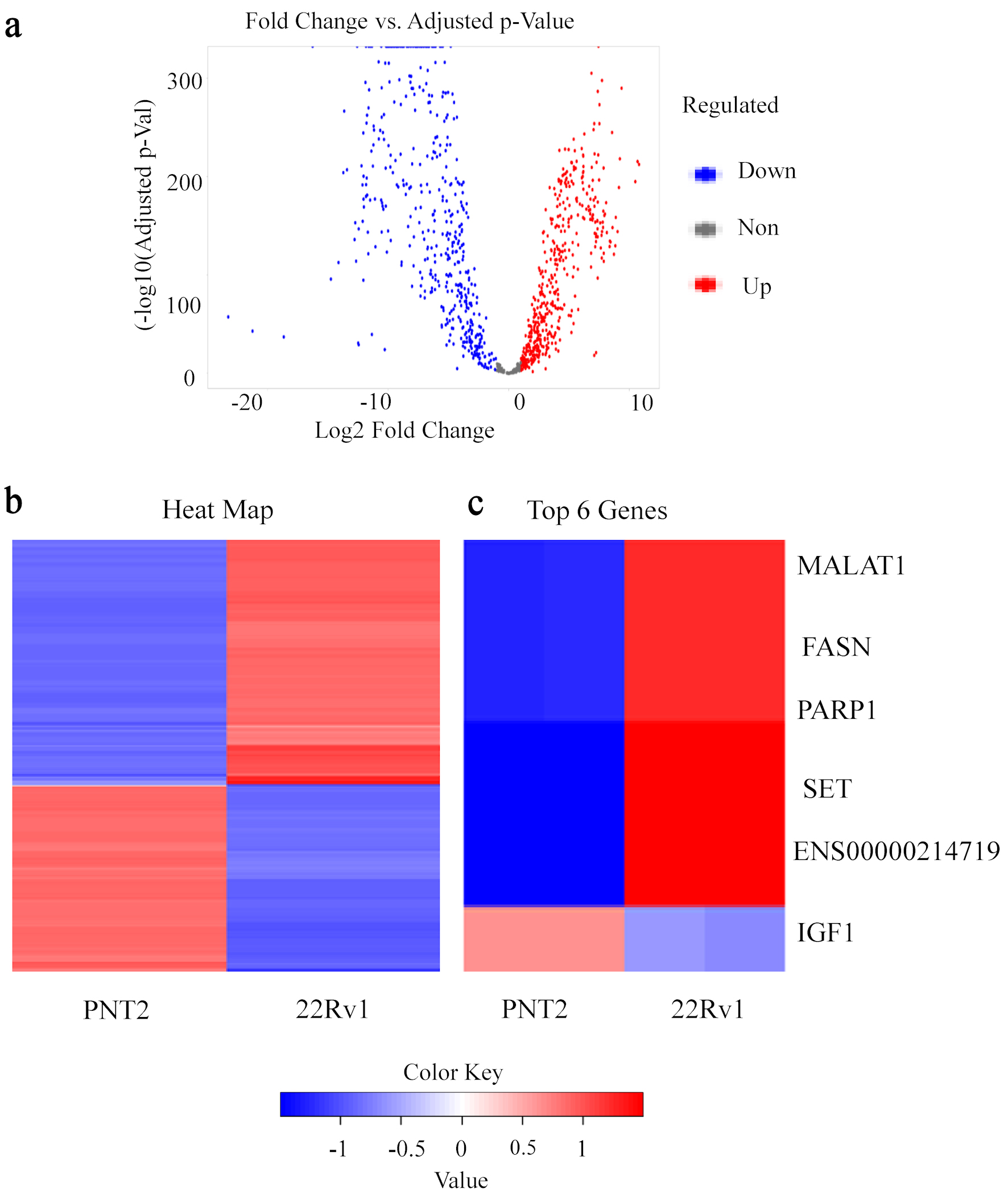
Methods: RNA sequencing–based transcriptomic profiling was performed to compare a non-malignant prostate epithelial model (PNT2) with a CRPC model retaining AR expression (22Rv1). Differential gene expression analysis was conducted using DESeq2. Functional enrichment analyses were performed using Gene Ontology (GO) and Kyoto Encyclopedia of Genes and Genomes (KEGG) pathway analyses. Gene co-expression network analysis was applied to identify coordinated regulatory interactions. Clinical validation of candidate genes was performed using Gene Expression Profiling Interactive Analysis 2 (GEPIA2), integrating datasets from The Cancer Genome Atlas (TCGA) and the Genotype-Tissue Expression (GTEx) project.
Results: Transcriptomic comparison revealed extensive transcriptional remodeling associated with the castration-resistant phenotype. Several genes, including MALAT1, FASN, PARP1, SET, ENSG00000214719, and IGF1, were significantly dysregulated. Functional enrichment analyses demonstrated activation of metabolic processes, ribosome-associated pathways, nucleic acid binding functions, and PI3K–Akt signaling. Gene co-expression network analysis identified an AR-centered regulatory module involving PARP1, KDM6B, BAZ2A, RANGAP1, NFAT5, and MAP4. Clinical validation confirmed elevated expression of FASN, PARP1, SET, and ENSG00000214719 in prostate adenocarcinoma samples.
Conclusions: Integrated transcriptomic and network analyses reveal coordinated metabolic, epigenetic, and DNA damage response pathways contributing to CRPC progression and identify potential combinatorial therapeutic vulnerabilities in advanced prostate cancer.
Published
Issue
Section
License
Copyright (c) 2026 The authors

This work is licensed under a Creative Commons Attribution 4.0 International License.