

Fusobacterium nucleatum-Mediated Neutrophil Extracellular Trap Formation Promotes Programmed Cell Death Ligand 1 Expression in Colorectal Cancer Cells via the Toll-Like Receptor 9/Interleukin-1 Receptor-Associated Kinase 4/Nuclear Factor Kappa-B Signaling Pathway
DOI:
https://doi.org/10.14740/wjon2827Keywords:
Colorectal cancer, Fusobacterium nucleatum, Neutrophil extracellular traps, PD-L1, TLR9, IRAK4, NF-κBAbstract
Background: Colorectal cancer (CRC) remains a major cause of cancer-related morbidity and mortality worldwide. Immune checkpoint blockade targeting the programmed cell death protein 1 (PD-1)/programmed cell death ligand 1 (PD-L1) axis has shown clinical benefit in selected CRC patients. However, the mechanisms regulating PD-L1 expression in the tumor microenvironment remain incompletely understood. Fusobacterium nucleatum (F. nucleatum) has been implicated in CRC progression and immune modulation; however, its potential role in regulating PD-L1 expression through neutrophil extracellular traps (NETs) remains to be further elucidated. This study aimed to further confirm whether F. nucleatum-induced NET formation promotes PD-L1 expression in CRC cells and to further elucidate the underlying signaling mechanism.
Methods: Human peripheral blood neutrophils were isolated from healthy volunteers and stimulated with F. nucleatum to induce NET formation. NET formation was evaluated by immunofluorescence staining of myeloperoxidase (MPO) and citrullinated histone H3 (Cit-H3), together with quantification of extracellular DNA. HCT116 CRC cells were co-cultured with stimulated neutrophils or treated with isolated NETs. PD-L1 expression was assessed by quantitative real-time PCR and Western blotting. DNase I, Toll-like receptor 9 (TLR9) inhibitor, interleukin-1 receptor-associated kinase 4 (IRAK4) inhibitor, and nuclear factor kappa-B (NF-κB) inhibitor were used to examine the involvement of NET-derived DNA and the TLR9/IRAK4/NF-κB pathway.
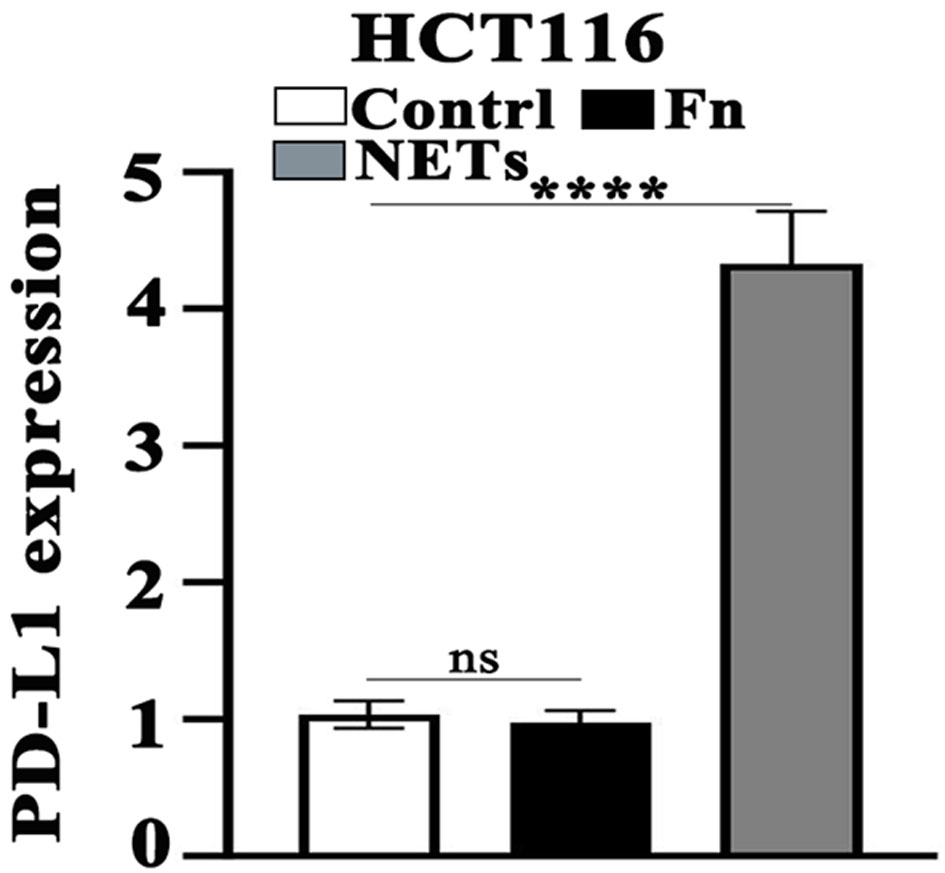
Results: F. nucleatum stimulation promoted NET formation in human neutrophils, as indicated by increased MPO. F. nucleatum-stimulated neutrophils upregulated PD-L1 expression in HCT116 cells. Consistently, isolated NETs directly increased PD-L1 expression, whereas DNase I treatment attenuated this effect. Mechanistically, NET exposure was associated with activation of the TLR9/IRAK4/NF-κB signaling pathway, and pharmacological inhibition of TLR9, IRAK4, or NF-κB reduced NET-induced PD-L1 upregulation.
Conclusion: These findings suggest that F. nucleatum-induced NET formation enhances PD-L1 expression in CRC cells, at least partly through NET-derived DNA-mediated activation of the TLR9/IRAK4/NF-κB signaling pathway. This microbiota–neutrophil–tumor axis may contribute to immune evasion in CRC and provide a potential therapeutic target for improving immunotherapy efficacy.
Published
Issue
Section
License
Copyright (c) 2026 The authors

This work is licensed under a Creative Commons Attribution-NonCommercial 4.0 International License.