


Steroid Hormone Receptor Isoform Diversity in Gynecologic Oncogenesis: Mechanisms, Biomarker Evidence, and Implications for Precision Oncology
DOI:
https://doi.org/10.14740/wjon2817Keywords:
Gynecologic cancers, Steroid hormone receptors, Alternative splicing, Receptor isoforms, Biomarkers, Precision oncologyAbstract
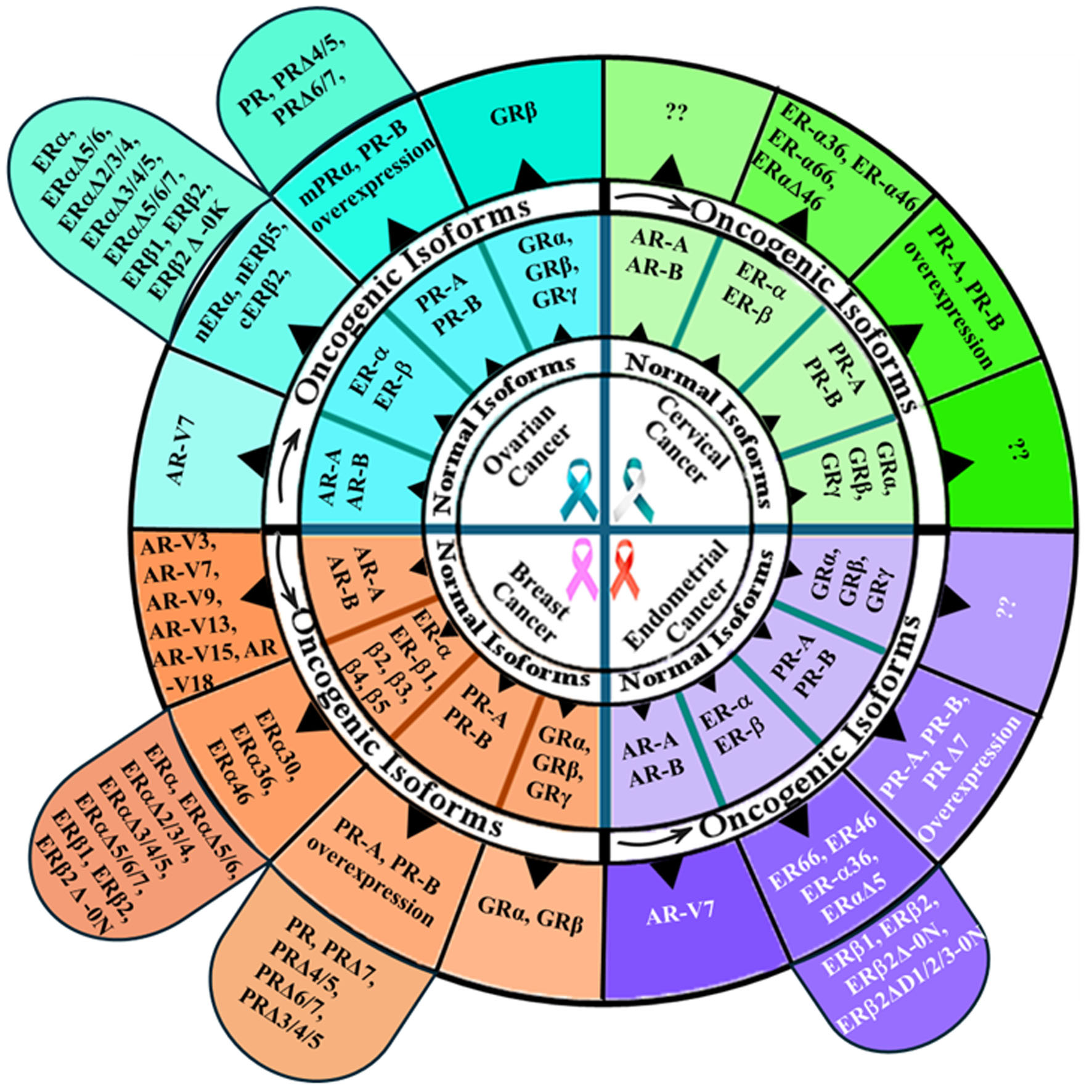
Aberrant regulation of steroid hormone receptors (SHRs) can alter transcriptional programs relevant to gynecologic tumor initiation, progression, and treatment response. Importantly, receptor diversity arises through biologically distinct mechanisms, including alternative pre-mRNA splicing, alternative promoter usage, alternative translation initiation, and post-translational modification; receptor subtypes encoded by different genes should not be considered splice variants. This narrative review focuses on estrogen receptor (ER), progesterone receptor (PR), androgen receptor (AR), glucocorticoid receptor (GR), and mineralocorticoid receptor (MR) diversity in ovarian, endometrial, cervical, vulvar, and related gynecologic malignancies. Evidence is organized by tumor type and interpreted according to its level of support, distinguishing mechanistic preclinical observations from patient associations, candidate biomarkers, and clinically evaluated therapeutic strategies. Breast-cancer studies are used only as comparative mechanistic context when directly relevant to SHR isoform biology. Current evidence is strongest for ER- and PR-related receptor forms, whereas gynecologic data for AR, GR, and especially MR variants remain limited. Clarifying the molecular origin, tumor-specific function, and clinical validation of individual receptor forms will be essential before isoform-directed approaches can be incorporated into precision gynecologic oncology.
Published
Issue
Section
License
Copyright (c) 2026 The authors

This work is licensed under a Creative Commons Attribution 4.0 International License.