


Organ-Specific Clinicopathological Features That Are Associated With Post-Relapse Survival of Metastatic Breast Cancer in Japanese Women: A Multicenter Cohort Study
DOI:
https://doi.org/10.14740/wjon2662Keywords:
Breast neoplasms, Neoplasm metastasis, Molecular typing, Prognosis, Brain Neoplasms, Retrospective studiesAbstract
Background: Metastatic breast cancer (MBC) presents heterogeneous clinical behavior depending on the metastatic site and molecular subtype. However, only a few studies have directly compared prognostic outcomes by the organ of initial distant recurrence. This multi-institutional retrospective study aimed to clarify the clinical and biological characteristics of MBC based on cases with single-organ metastasis at the time of initial MBC diagnosis, using real-world data from Japanese patients.
Methods: We retrospectively analyzed 309 Japanese women treated for early-stage breast cancer at six institutions between 2007 and 2021, who developed distant recurrence confined to a single organ (brain, lungs, liver, or bones) as the first site of metastasis. Patients with multi-organ metastases at initial recurrence were excluded.
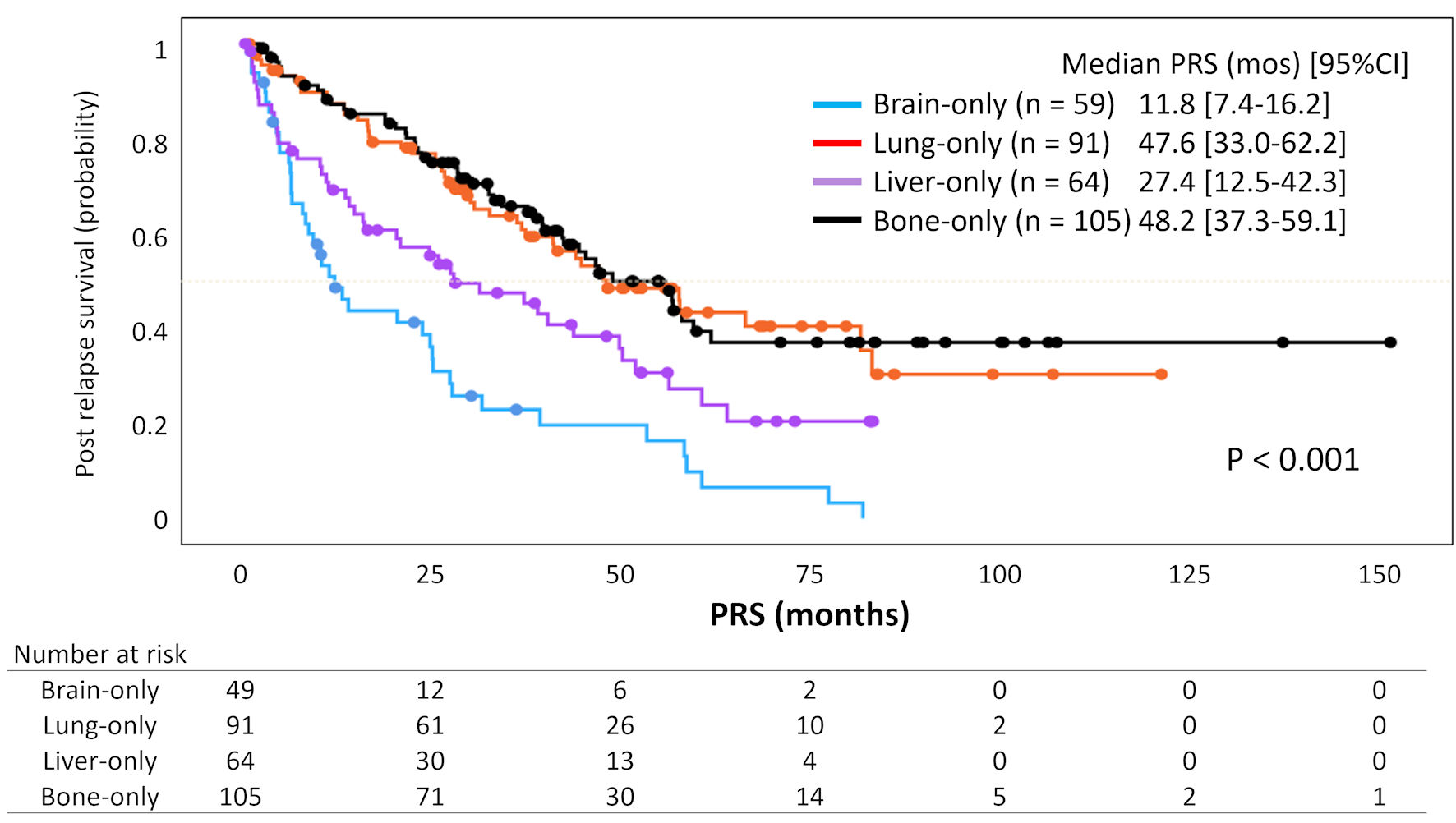
Results: The median distant metastasis-free survival and post-relapse survival (PRS) were 29.4 and 39.7 months, respectively. PRS was longest in patients with bone recurrence, followed by those with lung and liver recurrence, and shortest in those with brain recurrence (P < 0.001). Bone and lung metastases were more frequently associated with hormone receptor-positive tumors, whereas liver and brain metastases were enriched for human epidermal growth factor receptor 2 (HER2)-negative and triple-negative tumors. The multivariable Cox model identified older age, triple-negative subtype, and symptomatic recurrence as independent poor prognostic factors, while liver and brain metastases were also independently associated with shorter PRS. Site-specific analyses revealed that triple-negative subtype and symptomatic presentation were consistent markers of poor prognosis across most metastatic sites.
Conclusions: Based on a single-organ metastasis cohort, this study identified distinctive clinicopathological features and survival outcomes according to the site of initial distant recurrence. Brain metastases were associated with the poorest outcomes, highlighting the need for improved risk stratification and treatment strategies.
Published
Issue
Section
License
Copyright (c) 2025 The authors

This work is licensed under a Creative Commons Attribution 4.0 International License.