

Siglec-15 Expression in Gastric Carcinoma and Its Association With Clinicopathological Variables
DOI:
https://doi.org/10.14740/wjon2749Keywords:
Siglec-15, Gastric carcinoma, Immune checkpointAbstract
Background: Gastric cancer remains the fifth most common malignancy worldwide and is often diagnosed at advanced stages with limited treatment options. Although immunotherapy targeting the programmed cell death protein-1 (PD-1)/programmed death-ligand 1 (PD-L1) has improved outcomes in several cancers, many patients exhibit resistance, necessitating alternative therapeutic strategies. Sialic acid-binding immunoglobulin-like lectin-15 (Siglec-15), a recently recognized immune suppressor, is overexpressed in tumor cells and tumor-associated macrophages (TAMs), and is largely absent from normal tissues, making it a promising immunotherapy target.
Methods: This tissue microarray (TMA) study retrospectively collected formalin-fixed paraffin-embedded (FFPE) tissue specimens from 2015 to 2019 for 77 gastric cancer patients from King Hussein Cancer Center. Siglec-15 expression patterns in tumor cells and TAMs were analyzed and compared with clinicopathological features and patient outcomes. Survival was assessed using Kaplan–Meier analysis.
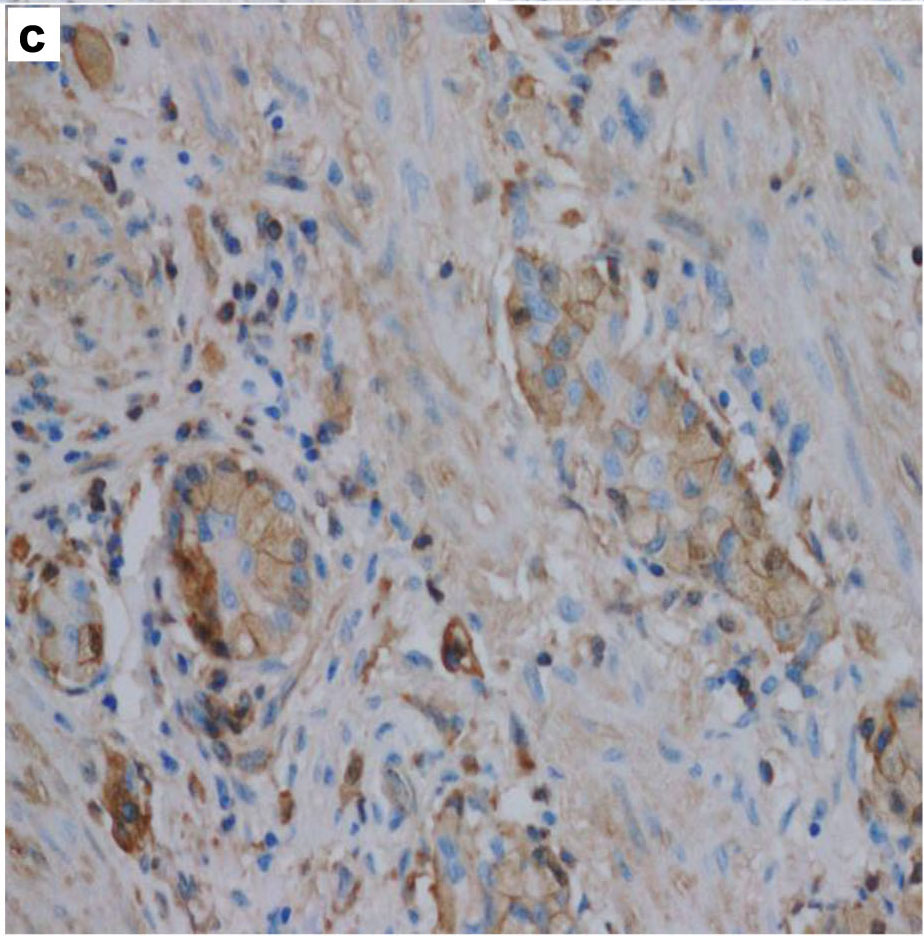
Results: Siglec-15 expression was detected in 50.7% of tumor samples and 36.4% of TAMs. Membranous expression was significantly associated with tumor differentiation, with higher expression observed in moderately differentiated tumors (P = 0.048), while cytoplasmic and TAM expression showed no significant associations with clinical variables. Although not statistically significant, positive Siglec-15 expression—both membranous and cytoplasmic—was associated with shorter median overall survival (cytoplasmic: 30.62 vs. 74.92 months, P = 0.1790; membranous: 39.44 vs. 66.07 months, P = 0.5761). Established prognostic indicators such as age, clinical stage, and pT stage were significantly associated with overall survival.
Conclusion: Siglec-15 is frequently expressed in gastric cancer and may contribute to immune evasion within the tumor microenvironment. Although no significant association with prognosis was found, its high expression underscores its potential as a novel immunotherapeutic target. Further studies are warranted to validate these findings and explore Siglec-15 clinical utility.
Published
Issue
Section
License
Copyright (c) 2026 The authors

This work is licensed under a Creative Commons Attribution 4.0 International License.