Exploring Two Decades of Cancer Trends in Adolescents and Young Adults: Insights From a Resource-Restricted Country
DOI:
https://doi.org/10.14740/wjon2731Keywords:
AYA, Jordan, Low-resourced countries, LMIC, Global OncologyAbstract
Background: Over 40% of Jordan’s population falls within the adolescent and young adult (AYA) age group (15–39 years). Cancer diagnosed in this population has unique biological, clinical, and psychosocial characteristics. This study describes national incidence trends and treatment outcomes among AYA patients in Jordan.
Methods: This retrospective observational study utilized data from Jordan Cancer Registry (JCR) reports (2000–2022), King Hussein Cancer Center (KHCC) registry outcomes, and the latest GLOBOCAN report. Descriptive statistics, Kaplan–Meier survival analysis, and log-rank testing were used to evaluate cancer incidence and overall survival.
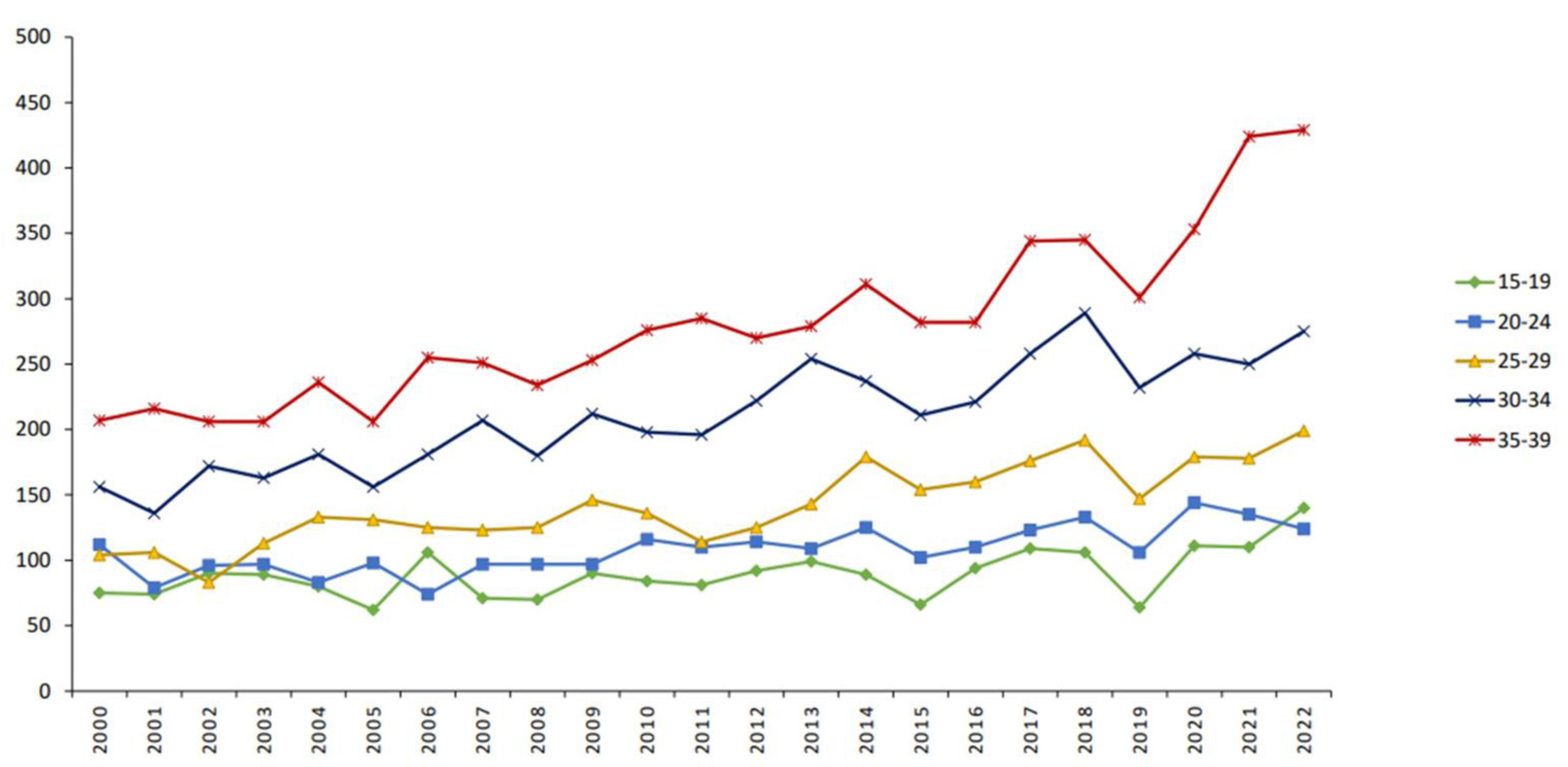
Results: The median age at cancer diagnosis in Jordan is 57 years, significantly younger than in Western countries. Over the past 23 years, the total number of cancer cases among AYA increased from 654 in 2000 to 1,167 in 2022, representing 13.3% of all cancer diagnoses in that year. Most cases (36.8%) occurred in the older AYA subgroup (35–39 years). Age-standardized incidence rates (ASIRs) were consistently higher in females than males across all AYA age groups, largely driven by breast and thyroid cancers. ASIR increased from 17.3 per 100,000 in the youngest group (15–19 years) to 84.4 per 100,000 in the oldest group (35–39 years). The 5-year overall survival (OS) among AYA patients was 73.0% (95% confidence interval (CI), 71.8–74.1), significantly better than older adults at 57.1% (95% CI, 56.4–57.8).
Conclusion: Jordan’s population is predominantly young, with over 40% classified as AYA. Although cancer incidence is lower in this age group compared with older adults, outcomes are generally more favorable. A comprehensive AYA oncology strategy incorporating specialized psychosocial, fertility, and survivorship services should be prioritized, particularly in resource-restricted settings.
Published
Issue
Section
License
Copyright (c) 2026 The authors

This work is licensed under a Creative Commons Attribution 4.0 International License.