


The Association Between Potential Nuclear Factor-Kappa B1 Gene Polymorphism rs28362491 and miR-206 Level in Patients With Acute Lymphoblastic Leukemia
DOI:
https://doi.org/10.14740/wjon2762Keywords:
miR-206, NF-κB1-94 ATTG polymorphism, Acute lymphoblastic leukemia, Hodgkin lymphomaAbstract
Background: microRNAs (miRNAs) and the nuclear factor-kappa B1 (NF-κB1) signaling pathway play a critical role in leukemogenesis. The miR-206 and NF-κB1-94 ATTG polymorphism (rs28362491) have a potential impact on cancer progression and treatment response. The primary objective of this study was to evaluate the levels of expression of miR-206, the genotypic distribution of the NF-κB1-94 ATTG polymorphism, and the secondary objective was to assess their relationship in patients with acute lymphoblastic leukemia (ALL), Hodgkin lymphoma (HL), and healthy controls.
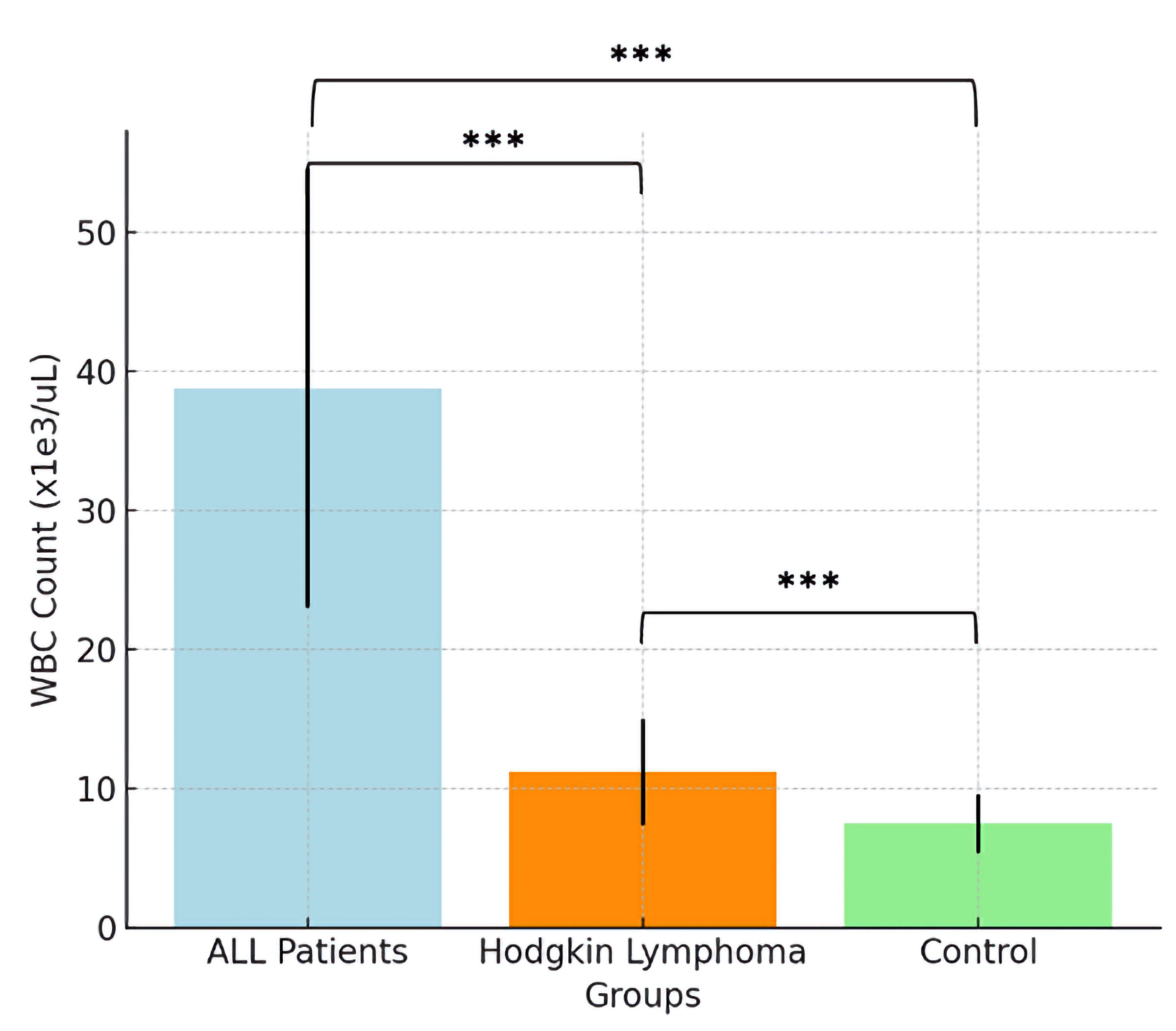
Methods: This was a retrospective case-control study conducted at King Hussein Cancer Center, from April to July 2023 and involved three distinct groups, ALL (n = 46), HL (n = 35), and healthy individuals (n = 30). Tissue samples were collected from patients, while blood samples from the control group. Data were retrieved from electronic medical records. The samples were analyzed for miR-206 expression and NF-κB1-94 ATTG polymorphism genotypes. miR-206 levels were measured using quantitative real-time polymerase chain reaction (qRT-PCR). Genotypic distributions were determined through PCR and subsequent sequencing. Statistical analyses evaluated correlations between miR-206 levels, NF-κB1 genotypes, and clinical outcomes.
Results: miR-206 expression was significantly lower in ALL patients compared to healthy controls (P < 0.0001), with mean values of 0.01 ± 0.1 in ALL, 0.01 ± 0.02 in HL, and 2,777.2 ± 31.55 in control subjects, suggesting a potential tumor suppressor role in ALL and HL. The genotypic distribution of the NF-κB1 (rs28362491) polymorphism revealed that homozygous Ins/Ins genotype was most prevalent in ALL compared with controls (41.3% vs 12%, P = 0.0048), and lowest in HL (28.5%). The heterozygous Ins/Del genotype was most prevalent in controls (60%), HL (42.8%), and least common in ALL (30.4%), indicating a possible protective effect against ALL. Further analysis showed no significant differences in miR-206 levels across the NF-κB1 genotypes (P = 0.9086) according to remission status for heterozygous Ins/Del and homozygous Del/Del compared to homozygous Ins/Ins.
Conclusions: This study suggests that: 1) there was no significant difference in miR-206 expression across different NF-κB1-94 ATTG polymorphism genotypes; 2) reduced miR-206 expression could have a potential tumor suppressor role in ALL patients; 3) there was no significant genotype effect on remission status in ALL patients; and 4) both abnormalities could serve as biomarkers.
Published
Issue
Section
License
Copyright (c) 2026 The authors

This work is licensed under a Creative Commons Attribution 4.0 International License.