

The Role and Mechanism of G Protein Subunit Alpha-15 in Colorectal Cancer: An Analysis of Two Hundred Eight Patient Samples and Public Datasets
DOI:
https://doi.org/10.14740/wjon2647Keywords:
G protein subunit α-15, Colorectal cancer, Immunohistochemistry, Single-cell sequencing, Pathology, Tumor microenvironmentAbstract
Background: Colorectal cancer (CRC) is a tumor with a relatively high incidence rate. The expression of G protein subunit α-15 (GNA15) in CRC and its specific role remain unclear.
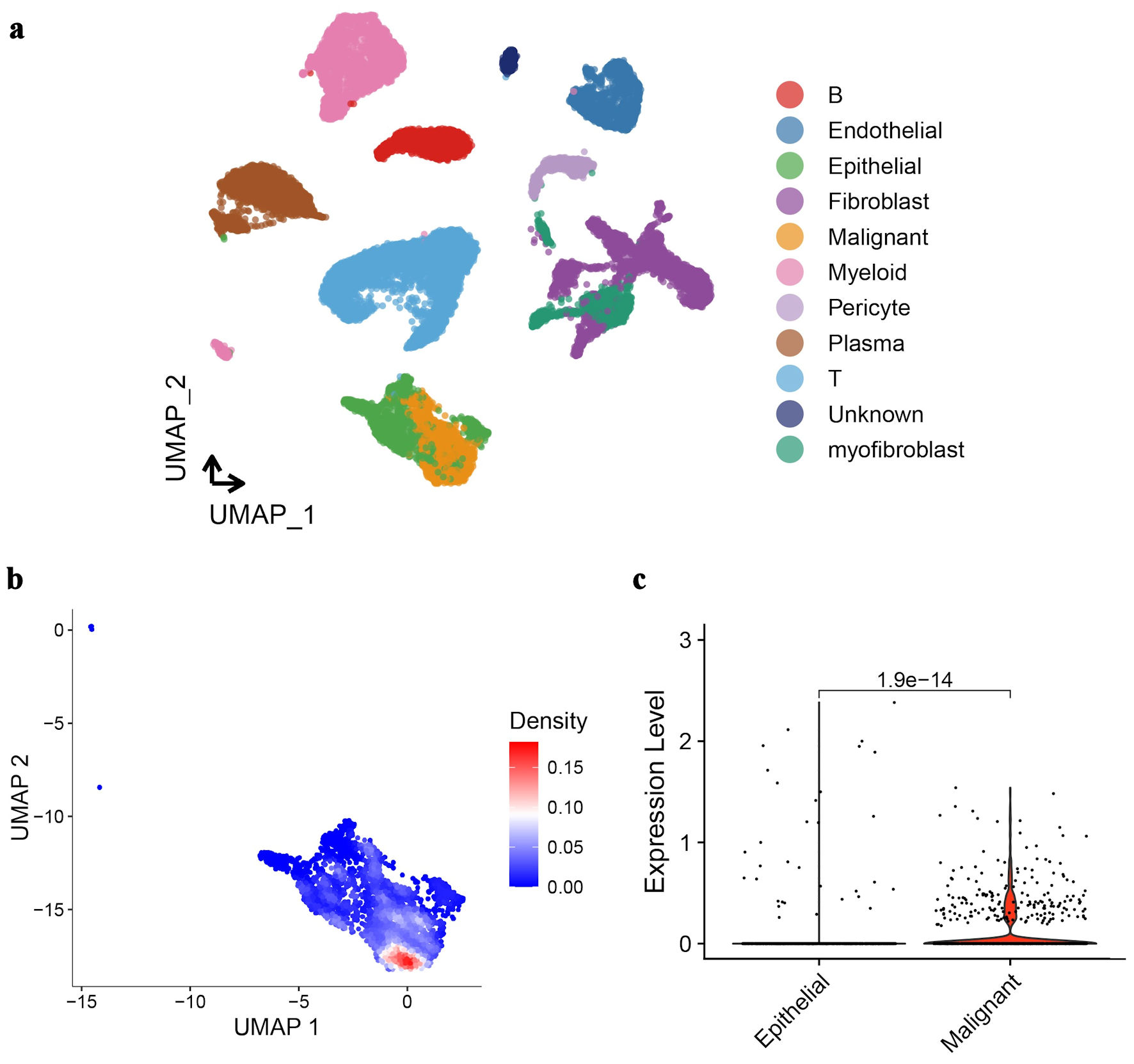
Methods: This study focused on both the diagnostic potential of GNA15 and its mechanistic role in CRC progression. Relevant expression data of CRC were obtained from global databases, and the expression differences of GNA15 in CRC tissues and non-cancerous tissues were analyzed after processing. Tissue microarrays of CRC samples and surrounding non-tumor tissues from 208 CRC patients at the Red Cross Hospital of Yulin City were collected and prepared. The expression level of GNA15 was scored after immunostaining with rabbit anti-human GNA15 antibody. Meanwhile, the GNA15 gene was knocked out in CRC cells, and its effects were evaluated. Data from databases were used to explore the relationship between GNA15 expression and various pathways through Gene Set Enrichment Analysis (GSEA). Finally, the reliability of the conclusions was tested through statistical analysis.
Results: The analysis results from the database and the tissue microarrays from the Red Cross Hospital of Yulin City both indicated that GNA15 was significantly overexpressed in CRC tissues. The gene effect scores calculated after knocking out GNA15 showed that the gene effect scores of HCC56 and DLD1 cell lines were strongly negative. GSEA indicated that the differentially expressed genes were mainly concentrated in biological processes such as antigen-antibody binding, immunoglobulin complex, phagocytosis, antigen processing and presentation, cell adhesion molecules, T helper 17 (Th17) cell differentiation, and toll-like receptor signaling pathway. This study has limitations, including a single-center retrospective cohort design and lack of in vivo validation.
Conclusions: GNA15 is highly expressed in CRC and has certain diagnostic value. GNA15 may play a role in CRC through affecting the growth of cell lines such as HCC56, DLD1 and biological processes such as antigen-antibody binding, immunoglobulin complex, phagocytosis, antigen processing and presentation, cell adhesion molecules, Th17 cell differentiation, and toll-like receptor signaling pathway.
Published
Issue
Section
License
Copyright (c) 2025 The authors

This work is licensed under a Creative Commons Attribution 4.0 International License.