


Elevated E2F6 Expression in Colorectal Cancer Tissues and Its Association With Clinicopathological Features
DOI:
https://doi.org/10.14740/wjon2707Keywords:
Colorectal cancer, E2F transcription factor 6, Clustered regularly interspaced short palindromic repeats, Spatial transcriptomics, Clinicopathological features, Diagnostic biomarker, Tumor buddingAbstract
Background: Colorectal cancer (CRC) is the third most common malignancy worldwide, and the role of E2F transcription factor 6 (E2F6) in CRC remains controversial.
Methods: We analyzed E2F6 mRNA expression across 19 platforms (2,449 CRC patients and 1,328 controls), evaluated expression patterns using single-cell RNA sequencing (scRNA-seq) and spatial transcriptomics, assessed E2F6 dependency using clustered regularly interspaced short palindromic repeats (CRISPR) knockout data from 52 CRC cell lines, and validated protein expression by immunohistochemistry (IHC) in 200 paired CRC and adjacent tissues. Associations between E2F6 and clinicopathological features were analyzed.
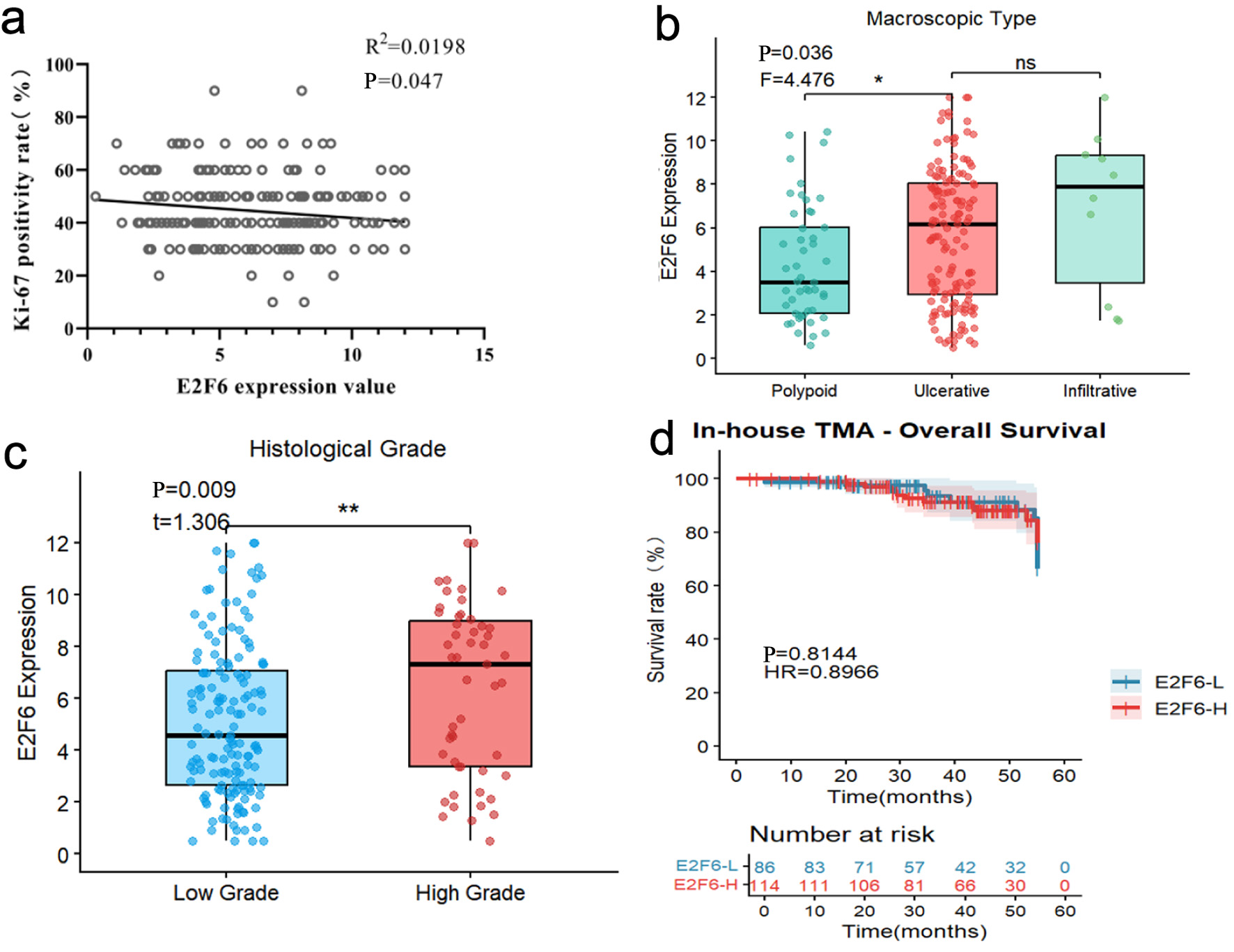
Results: E2F6 was significantly upregulated in CRC versus controls (summary receiver operating characteristic (sROC) area under the curve (AUC) = 0.93), supported by scRNA-seq and spatial transcriptomics. E2F6 knockout suppressed proliferation across CRC cell lines, and IHC confirmed higher E2F6 protein expression (AUC = 0.91). Elevated E2F6 correlated with adverse clinicopathological features including female sex, age ≥ 60 years, advanced T stage, high-grade tumor budding, and higher histological grade.
Conclusions: E2F6 is highly expressed in CRC and is associated with unfavorable clinicopathological features, supporting its potential utility as a diagnostic biomarker and a candidate target for CRC stratification and therapy development.
Published
Issue
Section
License
Copyright (c) 2026 The authors

This work is licensed under a Creative Commons Attribution 4.0 International License.