


Clinical Relevance of Prostate-Specific Membrane Antigen–Lipid Rafts Association and Membrane Protein Interactions in Prostatic Adenocarcinoma
DOI:
https://doi.org/10.14740/wjon2833Keywords:
PSMA, Prostate cancer, Lipid rafts, DPPIV, BiPAbstract
Background: Lipid rafts or detergent-resistant membranes (DRMs) have played a fundamental role during prostate-specific membrane antigen (PSMA) activation by serving as platforms for internalization and cell signaling. In the current study, we aimed to evaluate the clinical significance of PSMA–lipid rafts association in prostate adenocarcinoma.
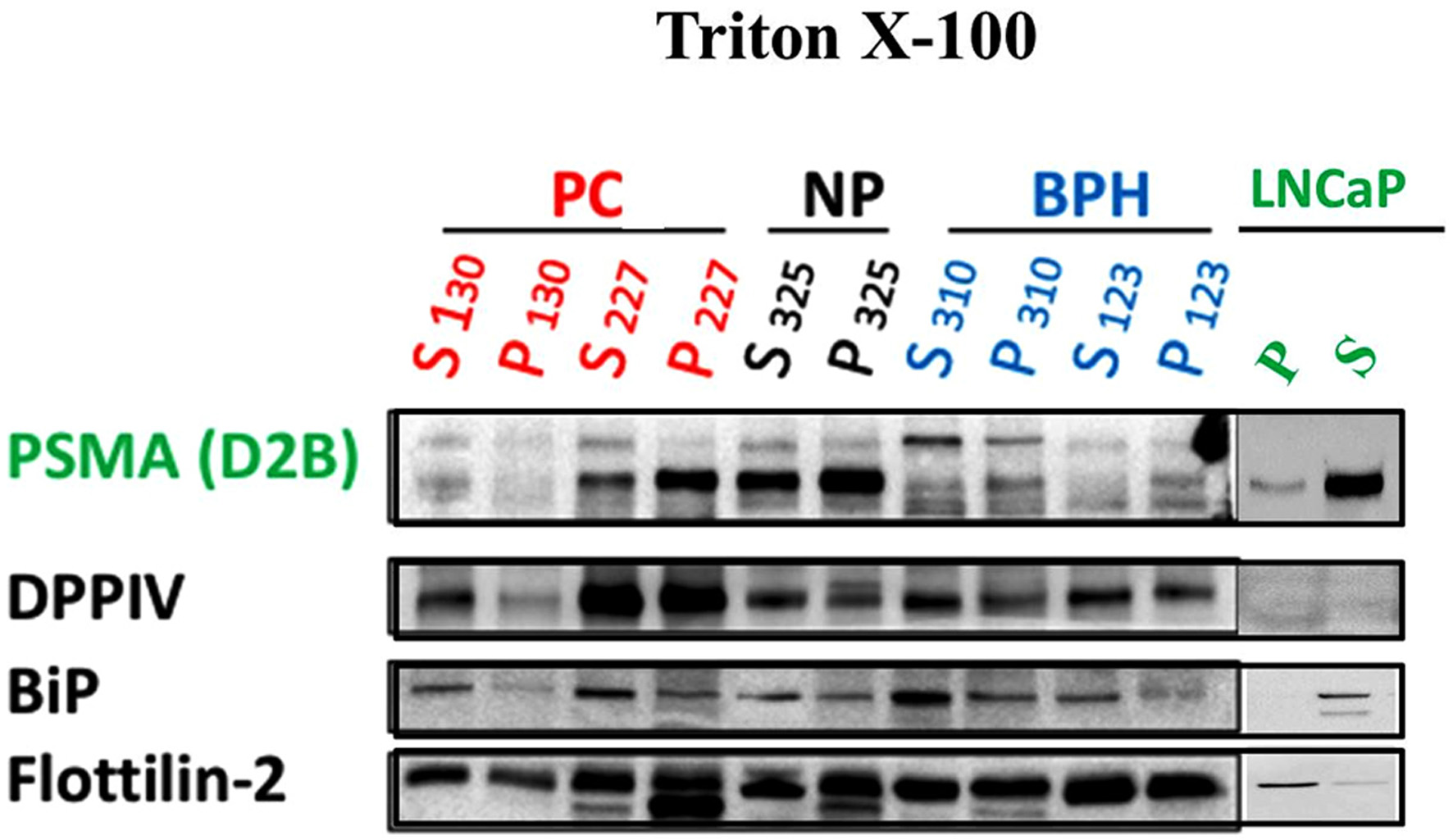
Methods: The study was carried out on two normal prostate (NP), 11 benign prostate hyperplastic (BPH), and 10 prostate cancer (PC) samples. Immunohistochemical analysis for PSMA, CD34, and Ki67 was performed. Serum levels of prostate-specific antigen (PSA) were assayed by Immulite autoanalyzer. DRMs were isolated from LNCaP cells, NP, BPH, and PC tissues. Using Triton X-100, PSMA, dipeptidyl peptidase IV (DPPIV), binding immunoglobulin protein (BiP), and Flotillin-2 were analyzed in both soluble and insoluble fractions by Western blot analysis.
Results: The findings demonstrate that PSMA is overexpressed in PC compared to normal and benign prostate tissues. The strongest staining of PSMA was membranous, with apical accentuation in neoplastic cells. Furthermore, upregulation of PSMA was concomitant with high expression of CD34 and Ki67 in malignant prostate. Our data indicate that PSMA, DPPIV, and BiP are distributed in the insoluble and soluble fractions of the analyzed PC samples. Nevertheless, the level of these membrane proteins is higher in the soluble fraction as compared to the DRMs in prostate adenocarcinoma.
Conclusion: Overall, this preliminary study provides initial insights into the potential clinical relevance of the association between PSMA and lipid rafts in human prostatic adenocarcinoma. The observed co-distribution of PSMA with DPPIV and BiP in the DRM fractions of PC samples suggests a possible association among these membrane proteins that may contribute to PC progression. Although these findings are preliminary, they support the hypothesis that crosstalk between these proteins could occur. Further studies are required to elucidate the underlying molecular mechanisms and to determine whether targeting PSMA and its associated membrane partners may represent a promising therapeutic strategy.
Published
Issue
Section
License
Copyright (c) 2026 The authors

This work is licensed under a Creative Commons Attribution 4.0 International License.