

Changes in Ki-67 and p53 Expression Following Neoadjuvant Chemoradiotherapy in Rectal Adenocarcinoma: A Retrospective Study
DOI:
https://doi.org/10.14740/wjon2845Keywords:
Rectal adenocarcinoma, Neoadjuvant chemoradiotherapy, Ki-67, p53, Immunohistochemistry, Tumor regression score, Pathological tumor response, Lymphovascular invasionAbstract
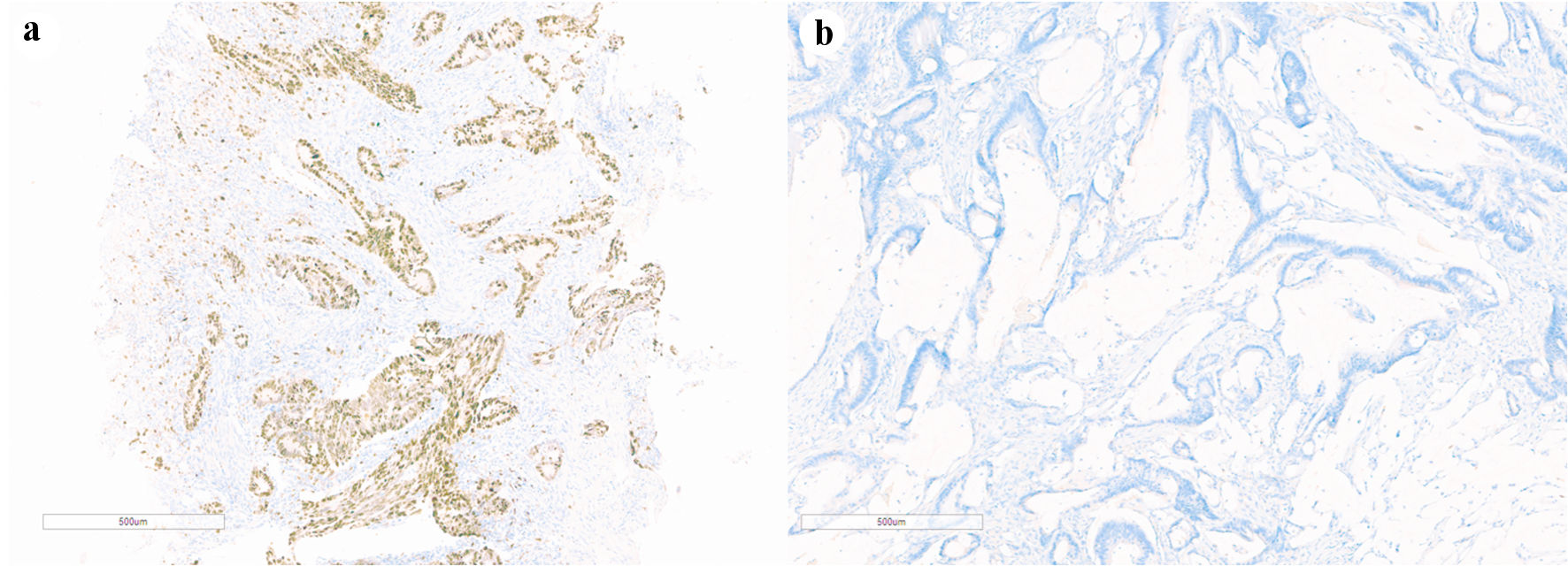
Background: Ki-67 is widely investigated for its role in assessing colorectal cancer aggressiveness, prognosis, and treatment response. High Ki-67 is associated with poor differentiation and advanced stage, yet there is no consensus on the optimal cutoff value that defines clinically meaningful expression. p53 overexpression was also correlated with high Ki-67. This study aimed to evaluate the effect of neoadjuvant chemoradiotherapy (nCRT) on Ki-67 and p53 expressions in rectal adenocarcinoma, explore their association with pathological tumor response using different Ki-67 cutoff thresholds, and assess their relationship with clinicopathological features.
Methods: A total of 45 patients with rectal adenocarcinoma treated with standard nCRT followed by surgery at a cancer center (from June 2023 to June 2024) were retrospectively included. Pre- and post-nCRT biopsy and resection specimens were immunostained for Ki-67 and p53. Two pathologists evaluated expression levels. Paired t-tests and regression analyses were used to assess biomarker changes and correlations with tumor regression score (TRS), pathological features, and clinical parameters.
Results: Ki-67 expression significantly decreased after nCRT (mean reduction: 32.9%, P < 0.001). A greater decline, especially at ≥ 50% and ≥ 70% cutoff thresholds, was associated with better TRS. Higher baseline Ki-67 was associated with lymphovascular invasion (P < 0.001). p53 showed only modest reduction and was not significantly associated with pathological tumor response.
Conclusions: Changes in Ki-67 expression following nCRT were associated with pathological tumor response, whereas pre-treatment Ki-67 and p53 expressions were not. Larger prospective studies are needed to validate these findings and further define the clinical utility of Ki-67 in rectal adenocarcinoma.
Published
Issue
Section
License
Copyright (c) 2026 The authors

This work is licensed under a Creative Commons Attribution 4.0 International License.