


Socioeconomic Changes During Cancer Therapy and Their Associations With Functional Decline and Treatment Delivery: A Multicenter Prospective Study
DOI:
https://doi.org/10.14740/wjon2848Keywords:
Socioeconomic barriers, Socioeconomic deterioration, ECOG performance status, Guideline-concordant care, Treatment receipt, LebanonAbstract
Background: Socioeconomic instability may affect cancer treatment delivery, yet prospective data on how changes in socioeconomic conditions influence treatment remain limited, particularly in crisis-affected settings. This study evaluated whether socioeconomic deterioration during cancer treatment was associated with a decline in Eastern Cooperative Oncology Group (ECOG) performance status, deterioration in treatment receipt, and decreased adherence to National Comprehensive Cancer Network (NCCN) guideline-recommended care among Lebanese patients with cancer.
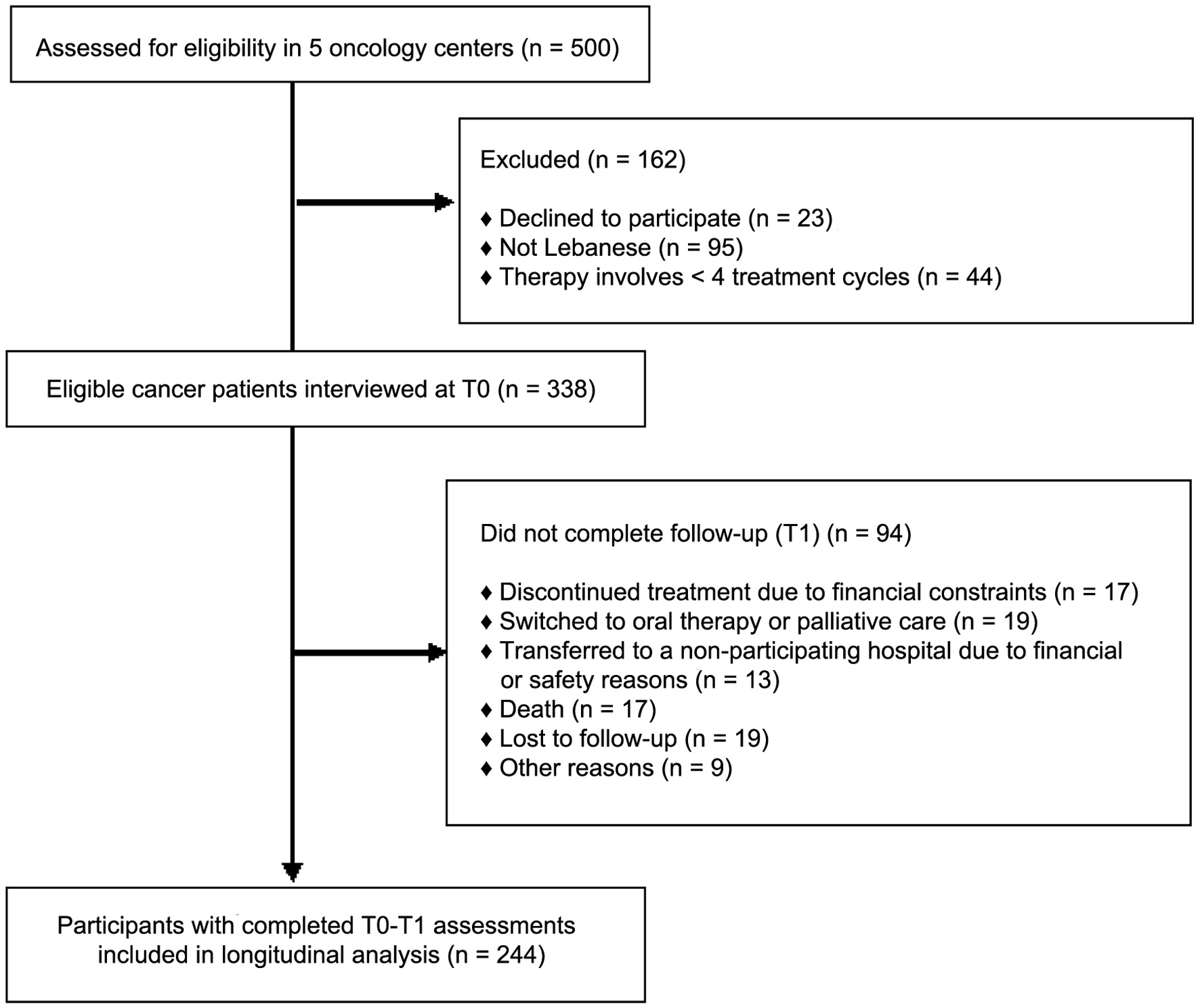
Methods: This prospective multicenter analytical study was conducted across five oncology centers in Lebanon from June 13, 2024, to October 30, 2025. Lebanese adults receiving hospital-administered cancer treatment were recruited and assessed at two time points. Baseline and follow-up socioeconomic, household, insurance, payment, clinical, and treatment data were collected via standardized forms. Logistic regression analyses were performed to evaluate associations between socioeconomic deterioration indicators and three outcomes: ECOG performance decline, NCCN compliance decline, and deterioration in treatment receipt.
Results: Among the 244 patients included in the final analysis, 14.3% experienced job loss, 39.3% had decreased household income, 21.3% lost their fixed household income source, 6.1% lost medical insurance, 6.6% had reduced insurance coverage, and 19.7% experienced deterioration in the treatment payment method. ECOG performance declined in 33.2% of patients, NCCN compliance declined in 20.5%, and treatment dose reduction or incomplete treatment occurred in 41.8% of patients. ECOG decline was associated with a greater number of elderly household members and job loss. Deterioration in treatment receipt was associated with loss of health insurance and change in payment method, whereas decline in NCCN compliance was not associated with any of the studied factors.
Conclusions: Socioeconomic deterioration during active cancer treatment was associated with functional decline and deterioration in treatment receipt. These findings support the routine monitoring of socioeconomic instability throughout cancer treatment to identify patients experiencing socioeconomic deterioration and compromised treatment delivery, particularly in crisis-affected healthcare settings.
Published
Issue
Section
License
Copyright (c) 2026 The authors

This work is licensed under a Creative Commons Attribution-NonCommercial 4.0 International License.