

Magnitude of Survival Benefit Associated With Tyrosine Kinase Inhibitors in Advanced Thyroid Carcinoma: A Systematic Review and Meta-Analysis Incorporating Updated Long-Term Evidence From SELECT (Lenvatinib) and COSMIC-311 (Cabozantinib) Trials
DOI:
https://doi.org/10.14740/wjon2842Keywords:
Oncology, Thyroid, Therapeutics, Targeted therapy, Survival outcome, Efficacy, Systematic reviewAbstract
Background: Tyrosine kinase inhibitors (TKIs) have transformed the management of advanced thyroid carcinoma. However, newer agents and updated long-term evidence from pivotal trials have not been comprehensively synthesized. This systematic review and meta-analysis integrates recent randomized evidence, including donafenib and nintedanib, with qualitative synthesis of updated SELECT (lenvatinib) and COSMIC-311 (cabozantinib) analyses, alongside separate quantitative evaluations of placebo-controlled and dose-comparison trials.
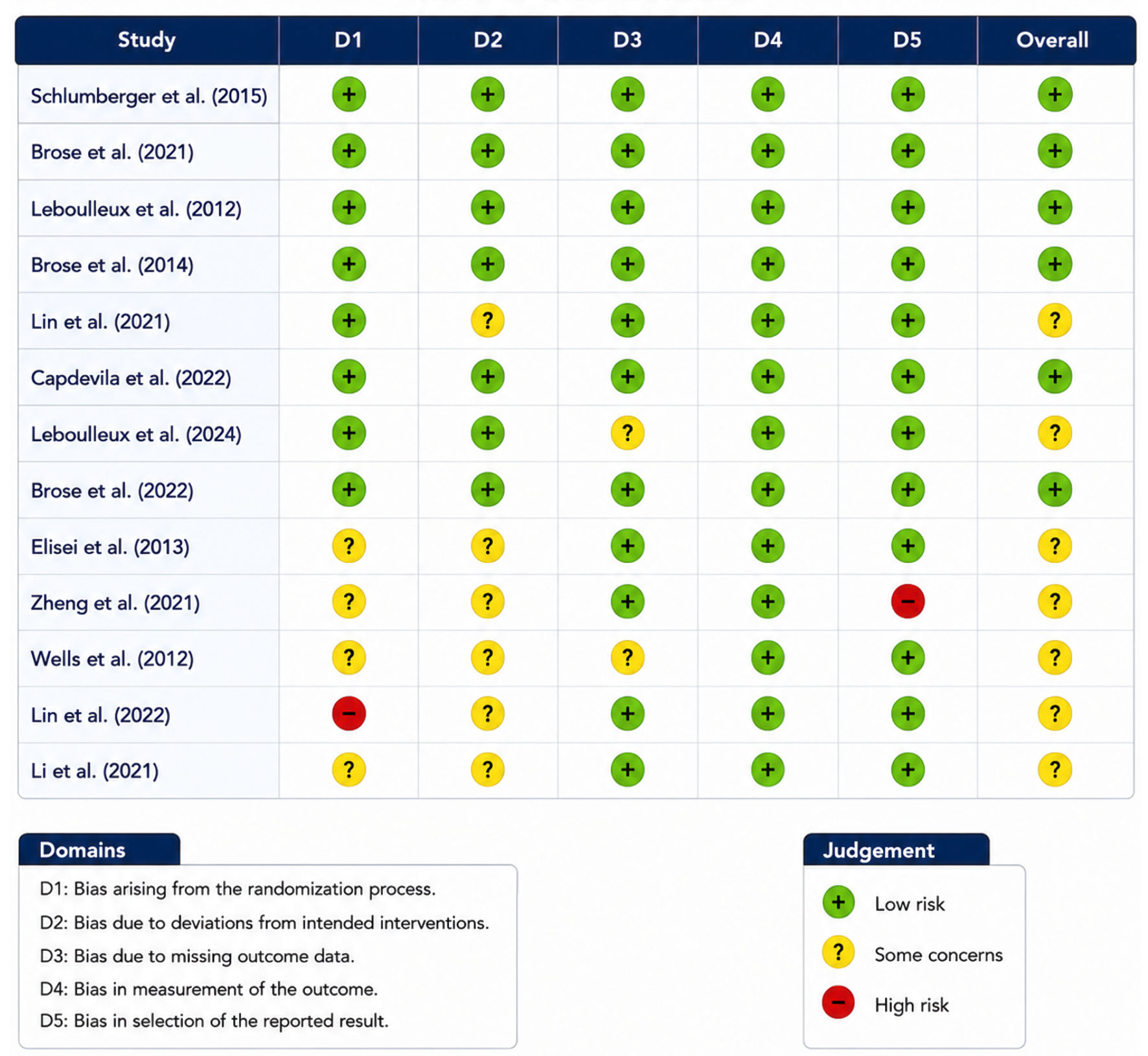
Methods: PubMed/MEDLINE, Embase, Cochrane CENTRAL, Google Scholar, and reference lists were systematically searched for randomized controlled trials evaluating TKIs in advanced thyroid carcinoma. Eighteen studies were included in the systematic review, of which 14 publications contributed to the meta-analysis. Updated SELECT and COSMIC-311 analyses were synthesized qualitatively to avoid duplication of patient populations. For trials reporting progression-free survival (PFS) and overall survival (OS) in separate publications, the most appropriate publication was selected for each outcome, resulting in risk-of-bias assessment of 13 unique randomized trials using the Cochrane RoB 2 tool. Random-effects meta-analyses were performed using SAS version 9.4.
Results: Thirteen randomized controlled trials involving 2,671 patients were quantitatively analyzed. Compared with placebo, TKIs significantly improved PFS (hazard ratio (HR) = 0.36; 95% confidence interval (CI), 0.26–0.50; P < 0.001), reducing the risk of disease progression or death by approximately 64%, although heterogeneity was substantial (I2 = 83.8%). Separate dose-comparison analyses of three trials demonstrated no significant advantage of higher-dose regimens (HR = 1.18; 95% CI, 0.87–1.60). TKIs also significantly improved OS (HR = 0.78; 95% CI, 0.67–0.91; P = 0.002), corresponding to a 22% reduction in mortality risk, with no heterogeneity (I2 = 0%). Lenvatinib demonstrated the greatest PFS benefit, followed by cabozantinib. Updated SELECT and COSMIC-311 analyses confirmed durable efficacy across extended follow-up and multiple patient subgroups. No significant publication bias was detected.
Conclusions: TKIs significantly improve PFS and OS in advanced thyroid carcinoma, supporting their role in contemporary clinical management. Lenvatinib demonstrated the greatest efficacy, while updated long-term evidence reinforced the durable benefits of lenvatinib and cabozantinib. Although placebo-controlled trials consistently favored TKIs, dose-comparison trials did not demonstrate superiority of higher-dose regimens. Further randomized studies with longer follow-up and biomarker-guided treatment strategies are warranted.
Published
Issue
Section
License
Copyright (c) 2026 The authors

This work is licensed under a Creative Commons Attribution 4.0 International License.