Prediction of Residual Disease in Unresectable Head and Neck Squamous Cell Carcinoma After Concurrent Chemoradiotherapy
DOI:
https://doi.org/10.14740/wjon2821Keywords:
Squamous cell carcinoma of head and neck, Residual disease, Time-to-treatment, Neutrophil-to-lymphocyte ratio, Inflammatory biomarkers, Body mass indexAbstract
Background: Concurrent chemoradiotherapy (CCRT) for unresectable head and neck cancer (HNC) in advanced stages is associated with a high probability of residual disease (RD). Salvage surgery after completing CCRT often leads to severe complications, and palliative care is required if surgery is not feasible. The aim of this study was to develop a prediction model for RD based on pretreatment clinical features.
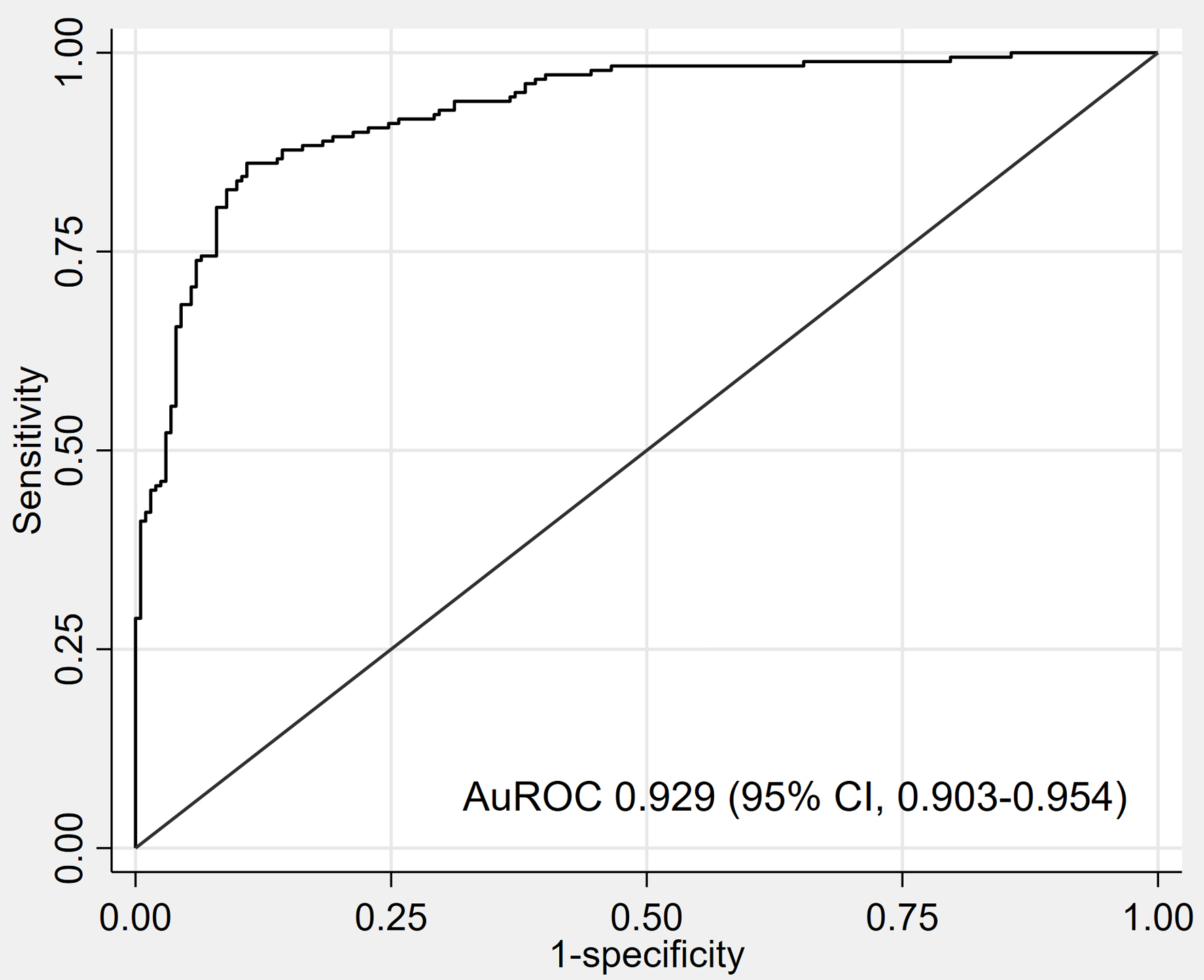
Methods: This retrospective observational cohort study analyzed the medical records of patients with unresectable HNC who received CCRT at the Radiation Oncology Unit of Buddhachinaraj Phitsanulok Hospital, Thailand, between October 2019 and October 2025. Clinical features and laboratory results were collected before treatment. Tumor response was evaluated 8–12 weeks after completion of CCRT using computed tomography or magnetic resonance imaging scans according to the Response Evaluation Criteria in Solid Tumors. Multivariable logistic regression was used to identify predictors of RD. The model performance was evaluated for discrimination using the area under the receiver operating characteristic curve (AuROC) and for calibration using calibration plots. Internal validation was performed using the bootstrap resampling method. Decision curve analysis was also performed.
Results: A total of 382 patients with HNC were included. After the completion of CCRT, 180 patients (47.1%) presented with RD. The final model retained primary tumor site (hypopharynx (odds ratio (OR): 3.56; 95% confidence interval (CI): 1.10–11.40) and oral cavity (OR: 3.77; 95% CI: 0.95–14.90)), maximum tumor diameter (OR: 3.37; 95% CI: 2.59–4.39), time to initiation of radiotherapy (OR: 1.01; 95% CI: 1.00–1.02), body mass index (OR: 0.97; 95% CI: 0.88–1.06), neutrophil-to-lymphocyte ratio (OR: 1.02; 95% CI: 0.94–1.10), and hemoglobin level (OR: 0.94; 95% CI: 0.79–1.11). The model demonstrated excellent discrimination, with an AuROC of 0.929 (95% CI: 0.903–0.954). At an RD probability cutoff of ≥ 47.1%, the model yielded a positive predictive value of 81.2% (95% CI: 75.1–86.4) and a negative predictive value of 89.2% (95% CI: 83.8–93.3).
Conclusions: This clinical feature-based prediction model accurately predicted the probability of RD in patients with unresectable HNC. Physicians can utilize this model for pre-CCRT treatment planning to identify high-risk patients.
Published
Issue
Section
License
Copyright (c) 2026 The authors

This work is licensed under a Creative Commons Attribution 4.0 International License.