


Chemoradiotherapy Is Associated With Improved Overall Survival in Intestinal-Type Gastric Cancer: A Retrospective Analysis
DOI:
https://doi.org/10.14740/wjon2797Keywords:
Intestinal gastric cancer, Survival, ChemoradiotherapyAbstract
Background: Gastric cancer (GC) is a leading cause of cancer-related deaths globally, and intestinal GC accounts for more than 50% of GC cases. However, there are no studies on chemoradiotherapy effects for intestinal GC in a large population in the last 30 years.
Methods: In this research, data of patients with intestinal GC between 1988 and 2017 were obtained from the Surveillance, Epidemiology, and End Results (SEER) database. Disparities in the survival by decade, age, gender, race, and therapy within the considered period were analyzed by Kaplan–Meier curves. The effect of chemoradiotherapy on survival was evaluated using a multivariable Fine–Gray regression model.
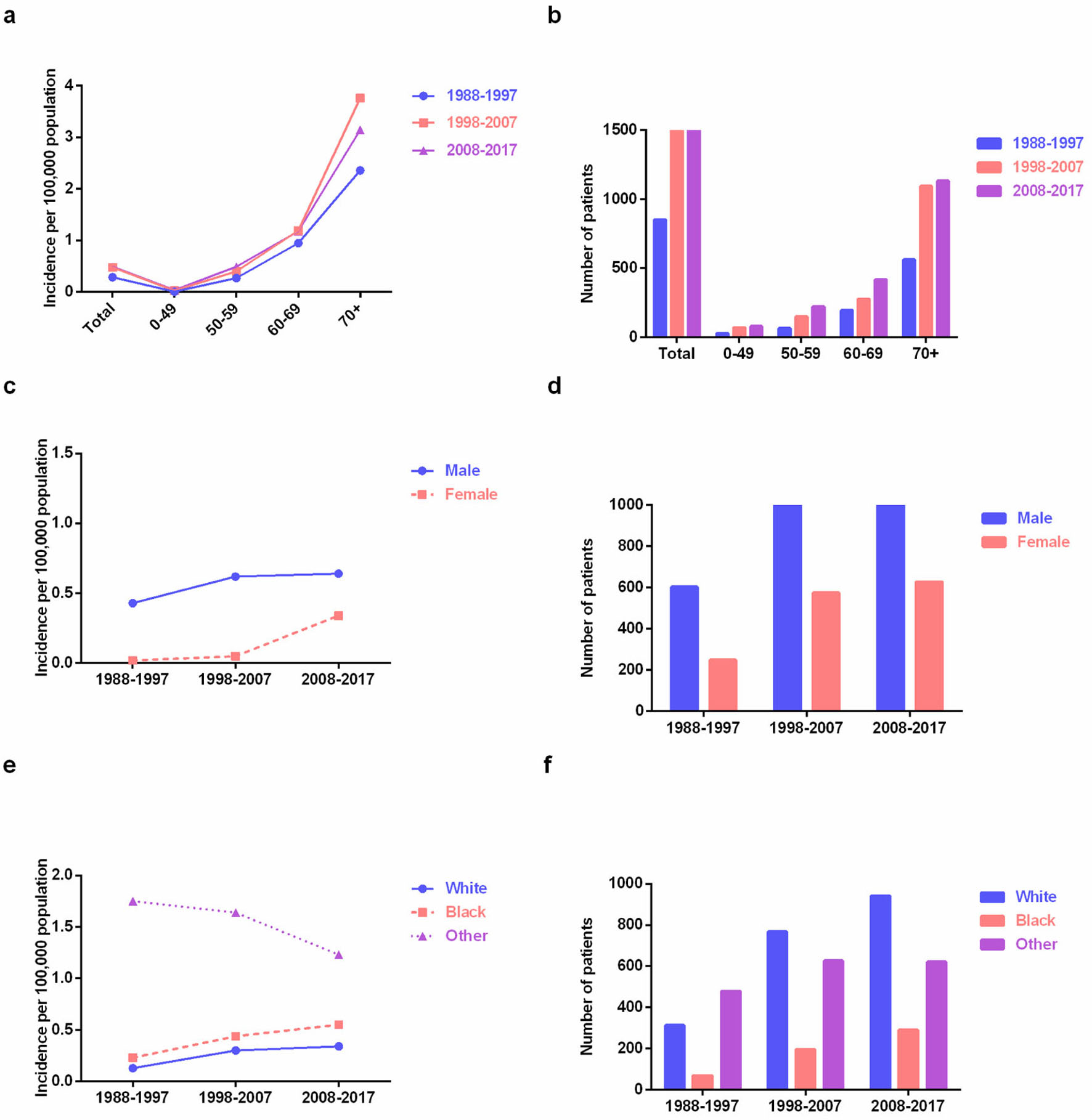
Results: The results showed that, in general, an upward trend in the incidence of intestinal-type GC was observed. There were certain gender and ethnic differences in the incidence and survival of intestinal GC patients. Chemotherapy or radiotherapy can significantly influence survival of patients, and the effects were significantly associated with the age and stage of patients but not with gender or race; older patients and those with distant lesions showed poor survival. Furthermore, chemotherapy combined with radiotherapy can more effectively improve patients’ survival, compared with radiotherapy or chemotherapy alone.
Conclusions: Chemoradiotherapy can more effectively improve patients’ survival, compared with radiotherapy or chemotherapy alone.
Published
Issue
Section
License
Copyright (c) 2026 The authors

This work is licensed under a Creative Commons Attribution 4.0 International License.