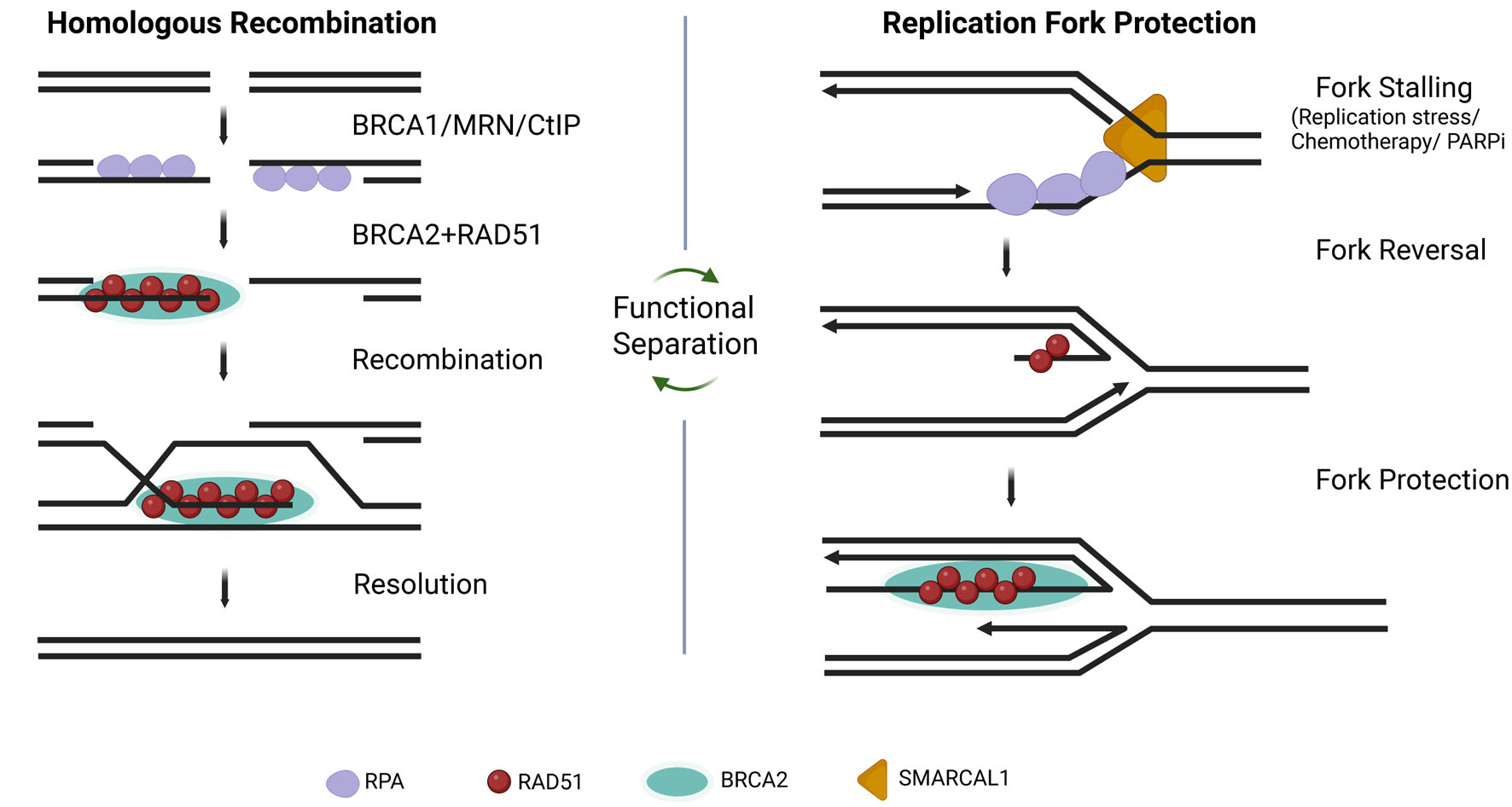
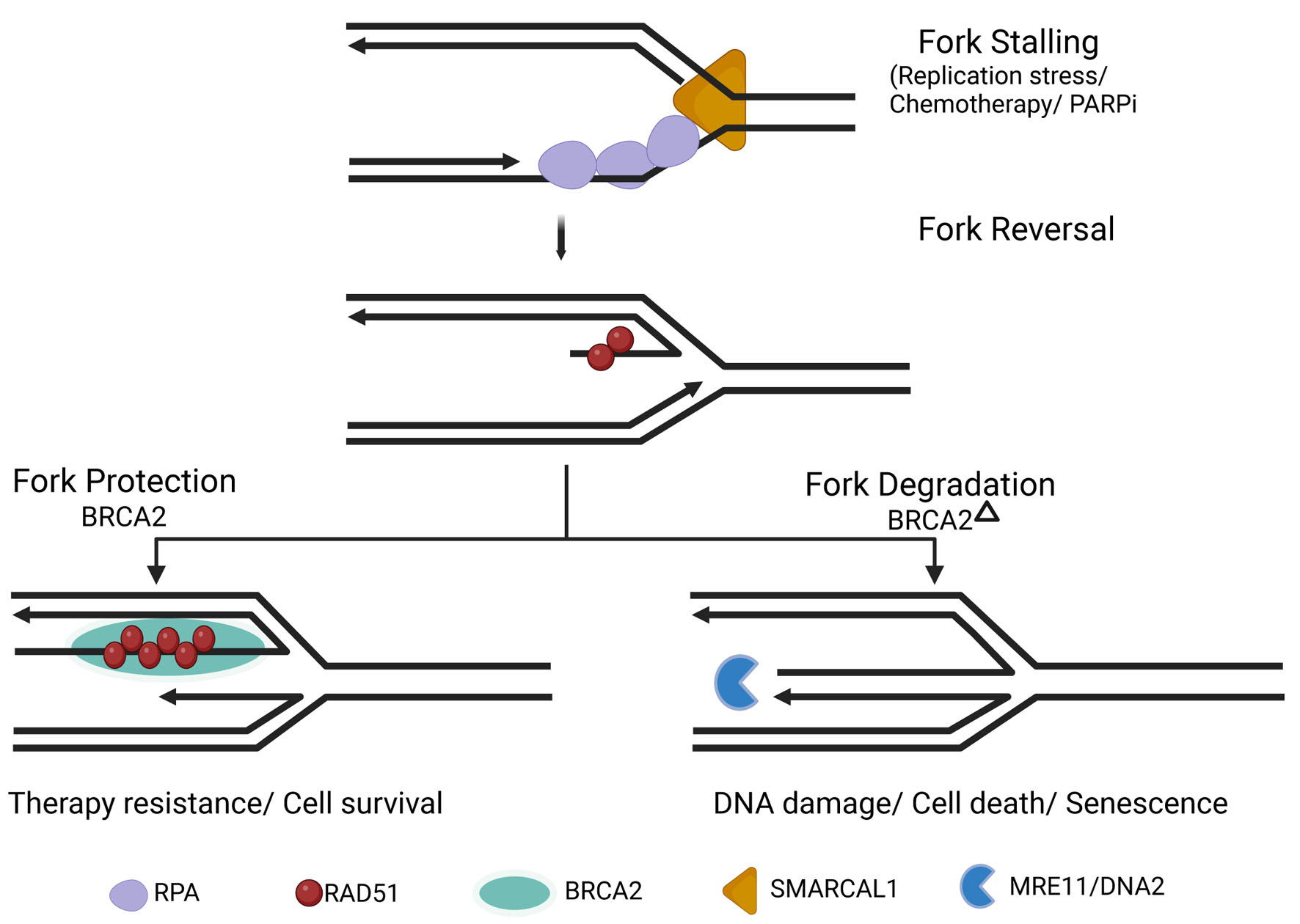
↓ Figure 1. RAD51-mediated homologous recombination versus replication fork protection. The left panel illustrates classical homologous recombination repair initiated following DNA double-strand break formation and BRCA1/MRN/CtIP-mediated end resection, followed by BRCA2-dependent RAD51 loading and recombination-mediated repair. The right panel illustrates replication fork stalling, fork reversal, and RAD51-mediated fork protection during replication stress. Functional separation between homologous recombination repair and replication fork stabilization may contribute to therapeutic resistance in breast cancer.