World Journal of Oncology, ISSN 1920-4531 print, 1920-454X online, Open Access
Article copyright, the authors; Journal compilation copyright, World J Oncol and Elmer Press Inc
Journal website https://wjon.elmerpub.com

Original Article

Volume 17, Number 2, April 2026, pages 237-246


Functional and Survival Outcomes of Partial Versus Radical Nephrectomy in Renal Cell Carcinoma Patients With Pre-Existing Chronic Kidney Disease: A Real-World Study

Figures

Figure 1.
Figure 1. Patient selection and follow-up flow diagram for renal cancer study at Cho Ray Hospital (2019–2024). Note: Total patients (N = 90): RN group (n = 41); PN group (n = 49). Excluded from survival analysis (n = 17): loss to follow-up (n = 12); incomplete oncological records (n = 5). Final survival analysis cohort (N = 73): RN group (n = 33); PN group (n = 40). Final functional analysis cohort (N = 68): excluded (n = 5) due to missing 12-month creatinine data.
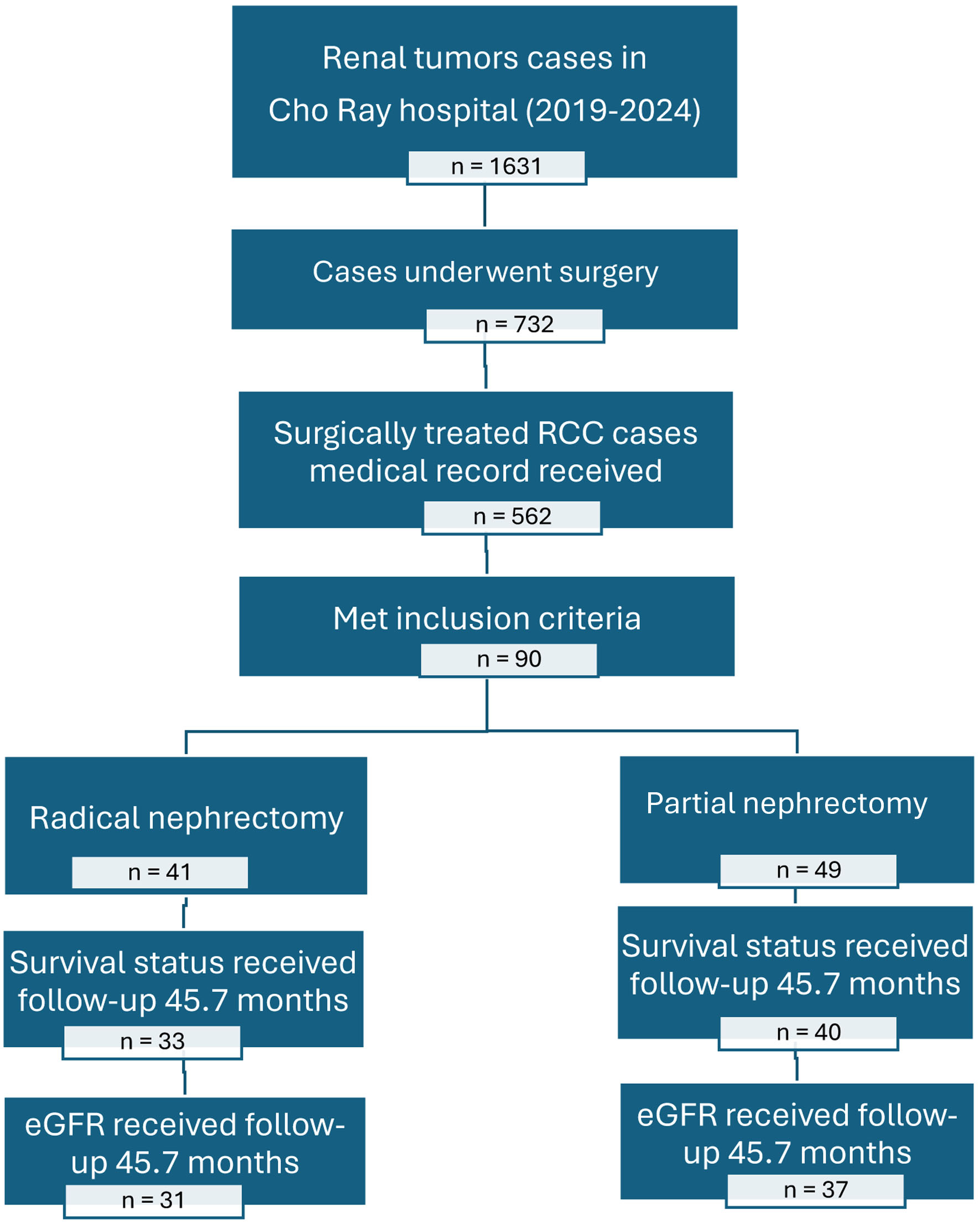
Figure 2.
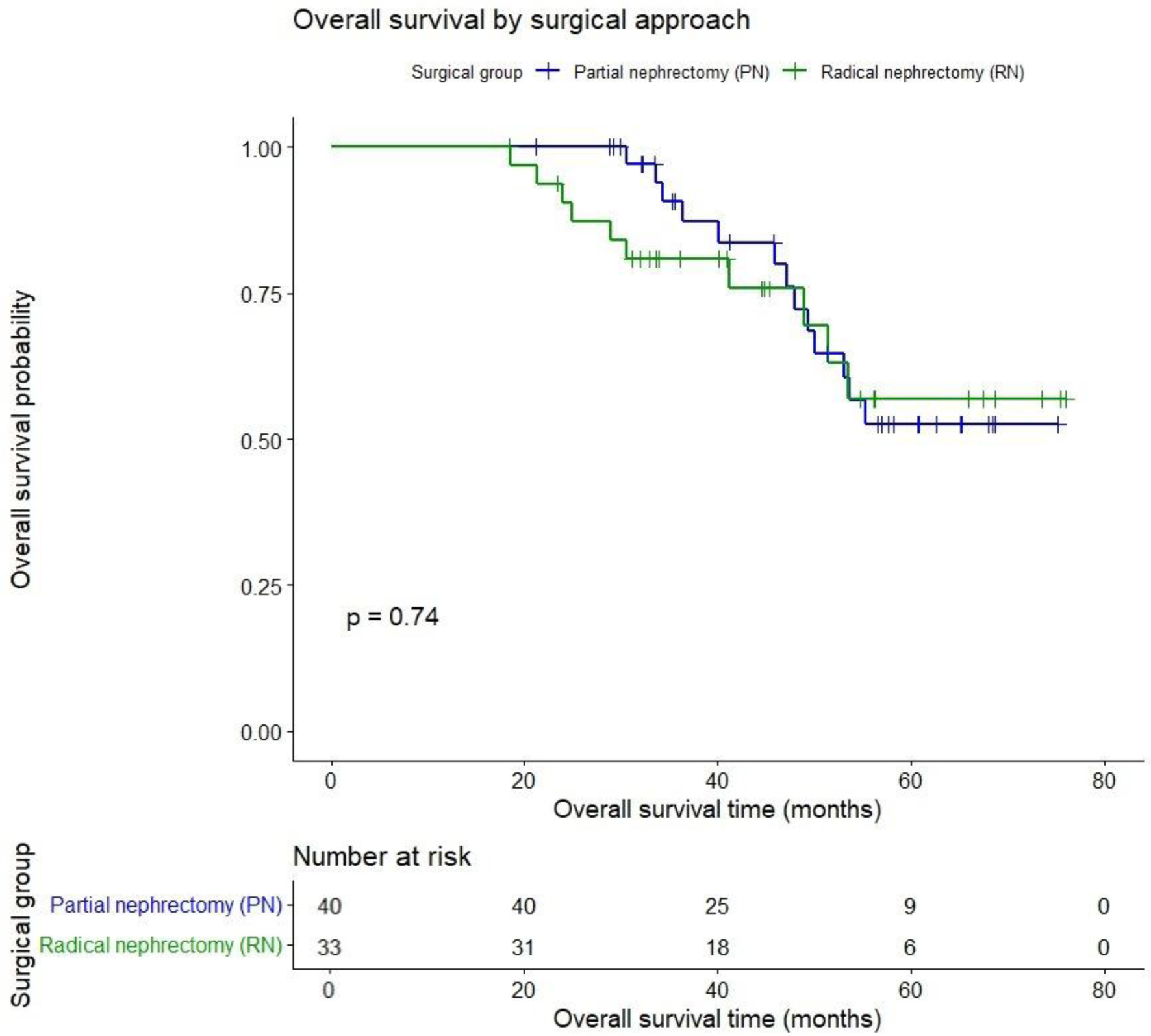
Figure 2. Overall survival after partial vs. radical nephrectomy for renal cancer.
Figure 3.
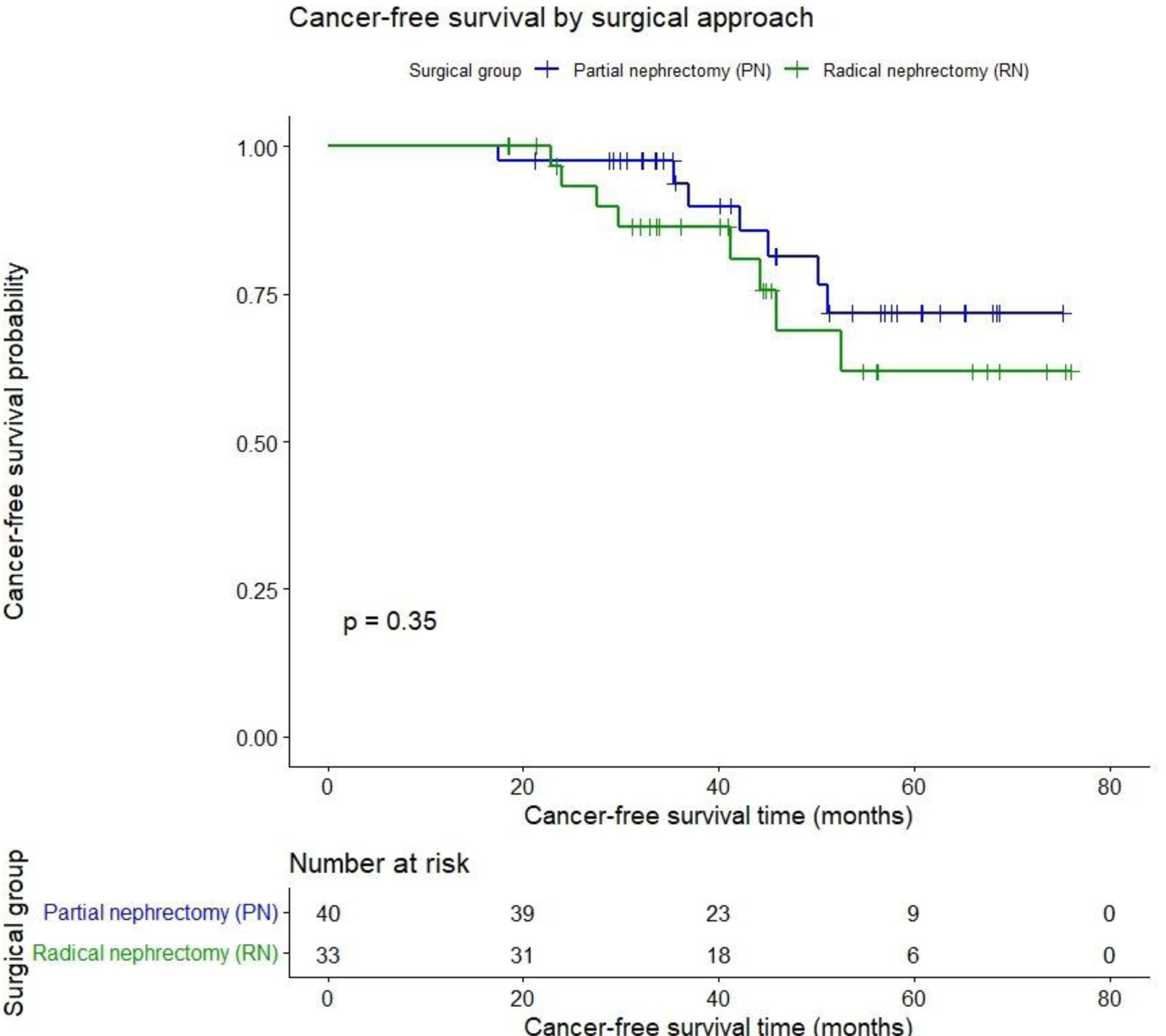
Figure 3. Cancer-free survival after partial vs. radical nephrectomy for renal cancer.
Figure 4.
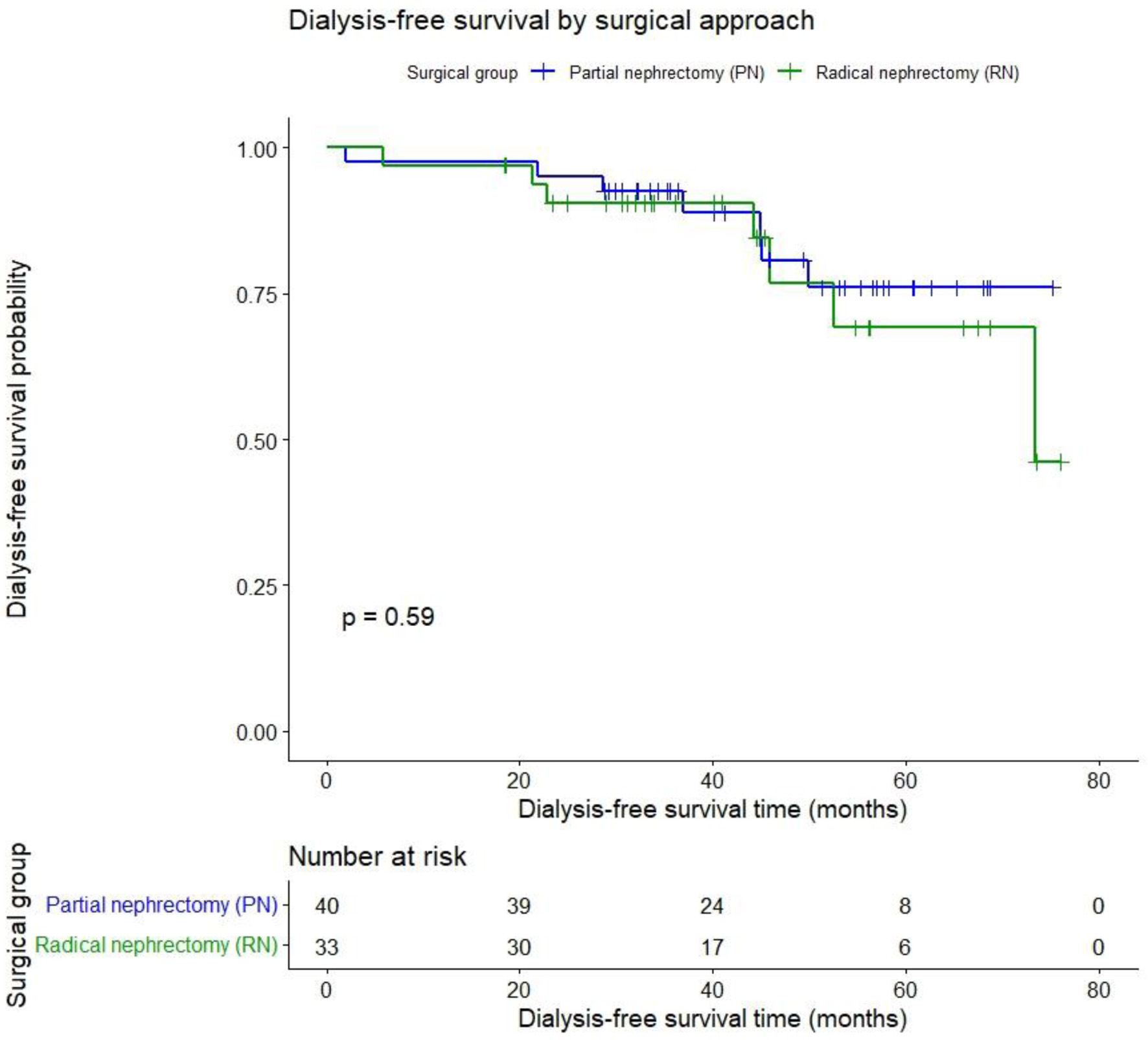
Figure 4. Dialysis-free survival after partial vs. radical nephrectomy for renal cancer.

Tables

Table 1. Baseline Characteristics and Tumor Complexity by Surgical Group (N = 90)
 
CharacteristicRN group (N = 41)PN group (N = 49)Total cohort (N = 90)P-value
This table summarizes patient demographics, clinical status, and tumor characteristics, demonstrating the selection bias in surgical indication. BMI: body mass index; eGFR: estimated glomerular filtration rate; ESRD: end-stage renal disease; Hb: hemoglobin; PN: partial nephrectomy; RCC: renal cell carcinoma; RN: radical nephrectomy.
Patient demographics and pre-operative health
  Mean age (years)59.5 ± 13.363.1 ± 10.961.5 ± 12.10.16
  Male sex (%)7877.677.80.96
  Mean BMI21.2 ± 3.220.8 ± 2.821.0 ± 3.00.54
  Flank pain (%)--53.3-
  Incidentally detected (%)--41.1-
  Cardiovascular disease (%)--45.1-
  Type II diabetes mellitus (%)--18.9-
  ESRD on dialysis (%)9.804.40.042
  Mean pre-operative Hb (g/L)121.6 ± 25.2137.6 ± 17.6130.3 ± 22.8< 0.001
  Mean pre-operative eGFR (mL/min/1.73 m2)43.2 ± 16.748.8 ± 10.446.3 ± 13.90.58
  Baseline eGFR < 45 (mL/min/1.73 m2)8 (19.5%)10 (20.4%)18 (20.0%)0.92
  Positive proteinuria (%)41.538.8400.482
Tumor and pathological characteristics
  Median tumor size (cm)8.03.75.9< 0.001
  Mean RENAL score10.27.18.5< 0.001
  Post-operative ≥ T2 (%)75.66.237.70.001
  Histology: clear cell RCC (%)75.569.472.30.4


Table 2. Perioperative Outcomes and Early Functional Change (N = 90)
 
OutcomeRN group (N = 41)PN group (N = 49)Total cohort (N = 90)P-value
This table summarizes surgical morbidity, technique utilized, and the initial functional response to surgery. AKI: acute kidney injury; eGFR: estimated glomerular filtration rate; PN: partial nephrectomy; RN: radical nephrectomy.
Surgical technique and morbidity
  Open surgery (%)75.642.957.80.001
  Minimally invasive/robot (%)24.457.142.20.001
  Mean blood loss (mL)219.3 ± 307.7118.2 ± 95.5164.2 ± 223.60.02
  Transfusion required (%)12.205.60.017
  Overall AKI incidence (%)31.730.631.10.286
  Emergency dialysis required (%)7.303.30.091
  Severe complication (≥ Clavien IIIa) (%)9.762.045.50.229
Functional change
  Change in eGFR post-operative (mL/min/1.73 m2)-6.2 ± 9.0−6.3 ± 7.5−6.2 ± 8.20.652
  Pre-operative eGFR vs. post-operative eGFRP < 0.001 (Paired)P < 0.001 (paired)P < 0.001 (paired)-


Table 3. Long-Term Renal Functional Outcomes (N = 68)
 
OutcomeRN group (N = 31)PN group (N = 37)P-value
This table demonstrates the long-term functional advantage of PN over RN, particularly regarding the magnitude of eGFR decline. eGFR: estimated glomerular filtration rate; PN: partial nephrectomy; RN: radical nephrectomy.
Mean follow-up duration45.7 ± 15.8 months
Pre-operative eGFR (baseline) (mL/min/1.73 m2)49.8 ± 6.748.8 ± 11.10.522
Long-term eGFR (endpoint) (mL/min/1.73 m2)26.5 ± 7.336.8 ± 10.8-
Total eGFR decline (mL/min/1.73 m2)−23.3 ± 6.0−13.2 ± 3.5< 0.001
CKD stage progression rate in F/U (%)100% (31/31)62.2% (23/37)0.004
Subgroup: pre-operative eGFR ≥ 45 mL/min/1.73 m2RN group (N = 23)PN group (N = 27)P-value
Pre-operative eGFR (baseline) (mL/min/1.73 m2)53 ± 3.954.5 ± 4.10.124
Long-term eGFR (endpoint) (mL/min/1.73 m2)28.3 ± 7.241.0 ± 6.9-
eGFR decline (mL/min/1.73 m2)−24.7 ± 5.3−13.5 ± 3.8< 0.001
Subgroup: pre-operative eGFR < 45 mL/min/1.73 m2RN group (N = 8)PN group (N = 10)P-value
Pre-operative eGFR (baseline) (mL/min/1.73 m2)40.5 ± 3.533.2 ± 8.70.083
Long-term eGFR (endpoint) (mL/min/1.73 m2)21.3 ± 5.120.8 ± 8.3
eGFR decline (mL/min/1.73 m2)−19.3 ± 6.5−12.4 ± 2.50.002


Table 4. Long-Term Survival Outcomes and Predictors of Mortality (N = 73)
 
OutcomePN group (N = 40)RN group (N = 33)P-value
This table confirms comparable survival rates between the two surgical groups, while identifying independent systemic risk factors for overall mortality. eGFR: estimated glomerular filtration rate; PN: partial nephrectomy; RN: radical nephrectomy.
Overall survival (OS) rate (%)75.069.70.74
Cancer-free survival (CFS) rate (%)82.575.80.35
Dialysis-free survival (DFS) rate (%)85.078.80.59
Independent risk factors for overall mortality (Cox regression)Hazard ratio (HR)95% Confidence interval (CI)P-value
Age (per year increase)1.11.02–1.120.01
Positive proteinuria5.41.35–21.810.017
Preoperative eGFR0.970.93–1.00.064
Tumor size1.070.87–1.320.503
RENAL score1.020.78–1.330.89


Table 5. Correlation of Factors With Magnitude of Long-Term eGFR Decline (N = 68)
 
FactorCorrelation coefficient (Pearson/Tau)P-valueInterpretation (direction of decline)
eGFR: estimated glomerular filtration rate.
Total RENAL score−0.454 (inverse)< 0.001Correlates with greater decline
Tumor size−0.500 (inverse)< 0.001Correlates with greater decline
Intraoperative blood loss−0.353 (inverse)0.012Correlates with greater decline
Pre-operative eGFR0.546 (positive)< 0.001Correlates with less decline (protective)
eGFR of contralateral kidney0.349 (positive)0.014Correlates with less decline (protective)